
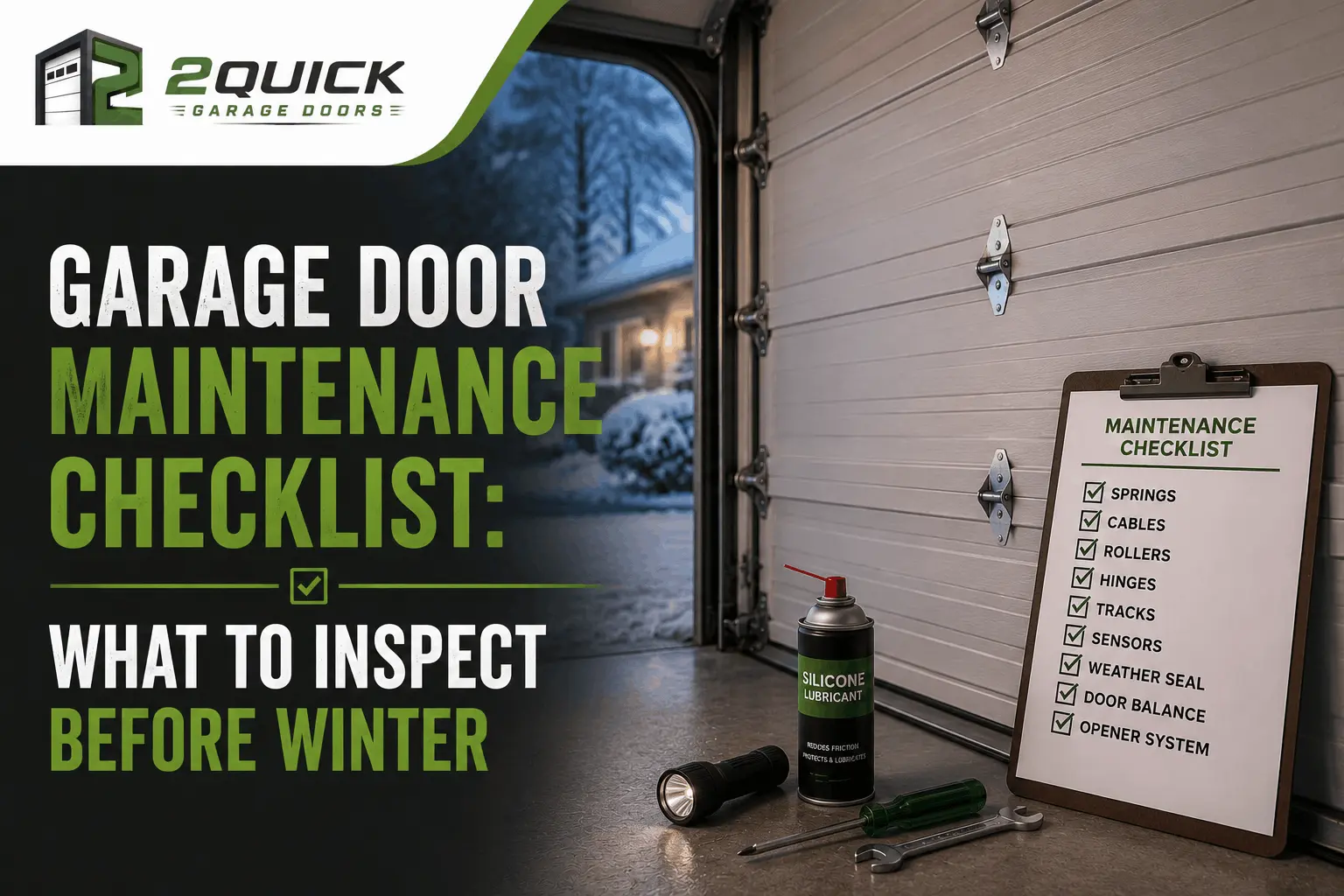
A thorough garage door maintenance checklist covers the parts of your door most likely to be affected by seasonal wear, springs, tracks, seals, hardware, and the opener itself, so nothing gets overlooked before temperatures drop. In The Woodlands, TX, winters are mild compared to much of the country, but the combination of occasional cold snaps, humidity, and heavy fall rain still puts real strain on a garage door’s moving parts. Running through this checklist now, rather than waiting until something stops working, is the difference between routine seasonal garage door maintenance and an unexpected repair call in January.
Why a Seasonal Checklist Matters Before Winter
Garage doors don’t fail all at once. Small issues, a slightly loose bolt, a hinge that’s lost its lubrication, a seal that’s started to crack, tend to build up quietly over months. Winter tends to be when those small issues finally show themselves, since cooler temperatures make metal contract slightly and can make existing wear more noticeable.
A seasonal garage door maintenance checklist isn’t about fixing problems. It’s about catching them while they’re still minor, which is almost always cheaper and less disruptive than waiting for a full breakdown.
Garage Door Springs
Garage door springs carry most of the door’s weight and are one of the most important things to check before winter. A spring under strain for months at a time can start showing wear that isn’t always obvious just from looking at the door operate.
What to check:
- Visible gaps in the coils, which can indicate the spring is stretched beyond normal
- Rust or pitting on the spring’s surface
- Any visible sagging when the door is fully closed
- Unusual noise, particularly a grinding or popping sound during operation
Springs are under significant tension and aren’t something to adjust or replace without the right tools and experience. If you want to go deeper on this specific check, our guide on how to check garage door spring tension safely walks through it step by step, and our garage door tune-up checklist covers spring care alongside the rest of the system.
Tracks and Rollers
The tracks guide the door’s movement, and rollers keep that movement smooth. Both take on dirt, debris, and general wear over the course of a year.
What to check:
- Debris or buildup inside the tracks
- Any visible bending, gaps, or misalignment
- Rollers that look worn, cracked, or aren’t turning freely
- Loose mounting brackets along the track
Weatherstripping and Seals
Seals do more work than most homeowners give them credit for. Beyond keeping drafts out, a good seal keeps moisture, pests, and debris from getting into the garage in the first place.
What to check:
- Cracking, stiffness, or gaps in the bottom seal
- Side seals pulling away from the frame
- Visible daylight coming through any part of the closed door
Worn weatherstripping is one of the easier and more affordable fixes on this entire checklist, and it’s worth doing before winter rather than after the first cold draft makes it obvious.
Opener and Safety Sensors
The opener is the part of the system doing the most repetitive work, and it’s worth confirming it’s still operating the way it should before you’re relying on it daily through the colder months.
What to check:
- The auto-reverse function, by placing an object in the door’s path and confirming it reverses on contact
- Sensor alignment, checking that the small lights on both sensors are solid, not blinking
- Remote and keypad response time
- Unusual noise or hesitation when the opener starts or stops
Hardware and Fasteners
Bolts, hinges, and brackets loosen gradually just from the door’s regular use. It’s an easy thing to overlook since none of it is usually visible unless you’re specifically checking.
What to check:
- Loose bolts along the track and frame
- Hinges that look worn, bent, or rusted
- Lubrication on all moving hardware, using a silicone-based spray rather than a heavier oil
This is one of the simpler garage door care tips on this list, but it’s also one of the most commonly skipped, mostly because a slightly loose bolt doesn’t cause an obvious problem until it does. For more detail on doing this correctly, see our posts on how to lubricate a garage door the right way and lithium vs. silicone grease for garage doors, which covers which product actually holds up best.
Balance Test
A simple balance test tells you a lot about how much strain your opener is under. With the door disconnected from the opener (using the manual release), lift it about halfway and let go.
A properly balanced door should stay in place. If it falls or rises on its own, that usually points to a spring or cable issue that’s putting extra strain on the opener, one that’s worth having looked at before it leads to a bigger failure.
Residential vs. Commercial Garage Door Maintenance
Residential garage door maintenance and commercial garage door maintenance follow the same general checklist, but the frequency tends to differ significantly. A residential door might open and close a handful of times a day, while a commercial door on a busier property can see dozens of cycles, which naturally accelerates wear on springs, rollers, and the opener itself.
If you’re maintaining a commercial property, it’s worth checking these same items more frequently, and considering a maintenance schedule built around actual usage rather than a fixed seasonal timeline.
Quick Garage Door Tune-Up Recap
If you’re working through this checklist yourself, here’s the short version to keep handy:
- Inspect springs for rust, gaps, or sagging
- Clear debris from tracks and check roller condition
- Check weatherstripping for cracks or gaps
- Test the opener’s auto-reverse and sensor alignment
- Tighten loose hardware and lubricate moving parts
- Run a balance test with the opener disconnected
Most of this can be done in under thirty minutes with basic tools, and it covers the parts of the door most likely to cause problems once winter sets in.
When to Call a Professional
Some parts of this checklist are safe and simple to handle yourself. Springs, cable tension, and anything involving the opener’s internal wiring are a different story, since getting these wrong can be genuinely dangerous, not just inconvenient.
If your walkthrough turns up anything involving the springs, cables, or an opener that isn’t responding properly, it’s worth having it looked at rather than working around it through winter. A professional garage door maintenance visit covers everything on this checklist in more depth, including the parts that aren’t safe for a DIY fix.
Keeping Your Garage Door Ready for Winter
A garage door maintenance checklist doesn’t need to be complicated to be effective. Most issues that turn into a winter breakdown start as something small and easy to catch months earlier, which is really the entire point of running through one before the season changes.
2Quick Garage Doors has helped homeowners throughout The Woodlands, TX stay ahead of exactly these kinds of issues, from spring wear to opener problems, before they turn into a repair call in the middle of winter. If you’d rather have a professional run through this checklist for you, get in touch with our team and we’ll take care of it.
How often should I run a garage door maintenance checklist?
Twice a year is a reasonable baseline for most homeowners, ideally once before winter and once in the spring, with a quick visual check in between if you notice anything unusual. Our post on how often garage door maintenance is needed breaks this down in more detail.
What’s the most commonly missed item on a garage door inspection checklist?
Hardware and fasteners tend to get skipped most often, since loose bolts and worn hinges don’t usually cause a noticeable problem until they’ve been an issue for a while.
Can I do a full garage door tune-up myself, or do I need a professional?
Cleaning, lubrication, and visual inspections are safe for most homeowners to handle. Anything involving springs, cables, or the opener’s internal components is safer left to a professional, given the tension and electrical components involved.
Does cold weather actually affect garage doors in The Woodlands, TX?
Winters here are milder than much of the country, but occasional cold snaps can still stiffen lubrication and make existing wear on springs or rollers more noticeable, which is part of why a pre-winter check is worth doing.
How is commercial garage door maintenance different from residential?
The checklist itself is largely the same, but commercial doors typically cycle far more often, which means components wear faster and benefit from more frequent inspection than a typical residential schedule.