
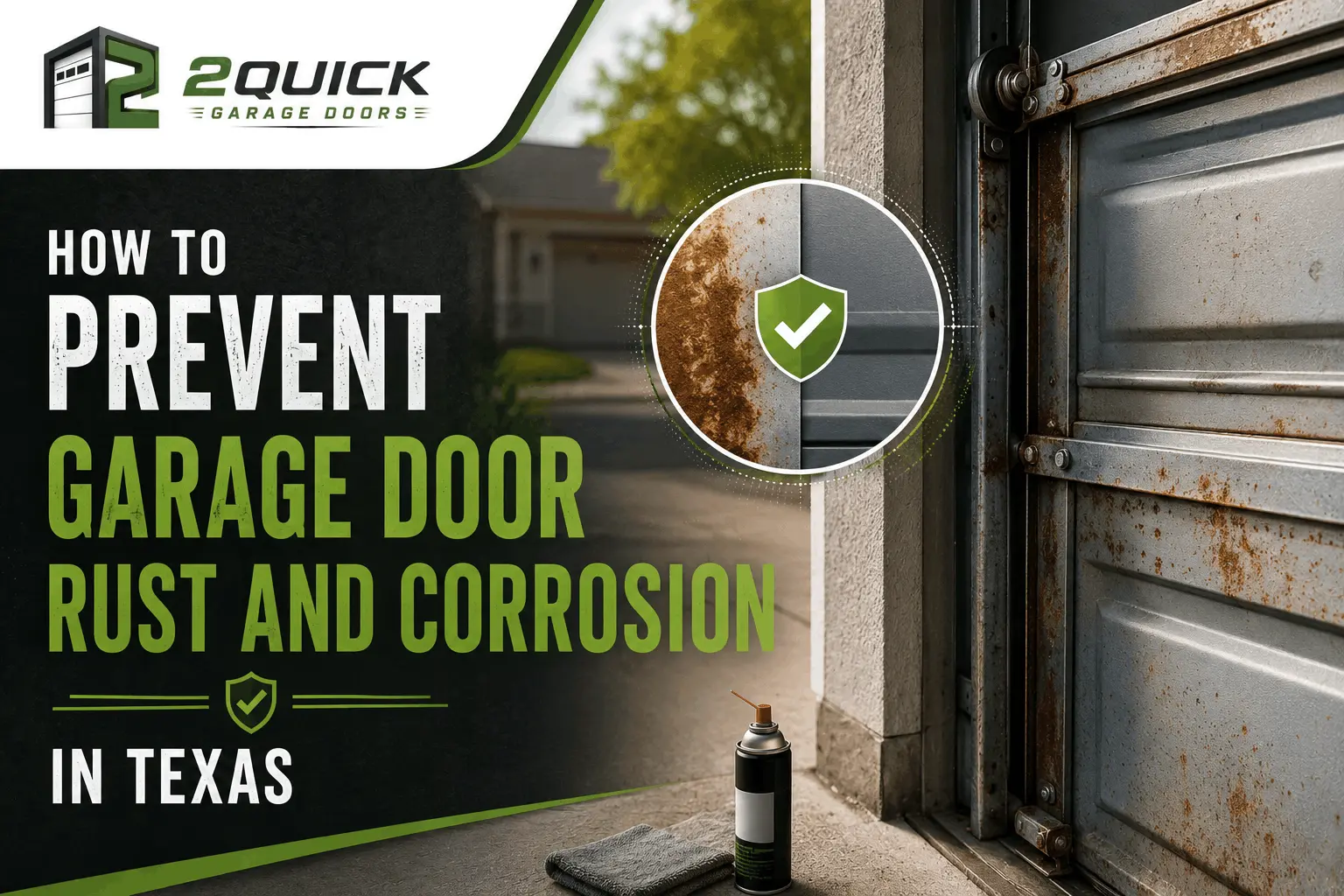
Garage door rust develops when moisture sits on unprotected metal long enough to start breaking it down, and in Texas, that happens faster than most homeowners expect. Between high humidity, heavy rain, and long stretches of heat that keep moisture trapped rather than letting it evaporate, garage door hardware takes a beating here in ways it wouldn’t in a drier climate. The good news is that most garage door rust and corrosion is preventable with a few consistent habits, and catching it early is far cheaper than dealing with it once it’s spread. If it’s been a while since your door had a proper look-over, a seasonal garage door maintenance visit is the easiest way to catch small spots before they become bigger ones.
Why The Woodlands, TX Weather Is Especially Hard on Garage Doors
The Woodlands doesn’t need coastal salt air to cause rust problems. Humidity alone is enough. When moisture in the air condenses on cool metal surfaces, especially overnight or during temperature swings between day and night, it creates a thin film of water that sits on exposed hardware for hours at a time.
Add in heavy seasonal rain, and you get water splashing directly onto the bottom panel, tracks, and hardware every time a storm rolls through. Combine that with long, hot stretches where a garage can trap humidity rather than ventilate it, and you have close to ideal conditions for corrosion to take hold, particularly on any parts where the protective coating has worn thin or chipped.
Common Signs of Garage Door Rust and Corrosion
Rust doesn’t usually show up all at once. It tends to start small, in places that are easy to miss unless you’re specifically looking.
Watch for these early signs:
- Small orange or brown spots on hinges, tracks, or springs
- Bubbling or flaking paint on the panel surface
- A rough, pitted texture where the metal used to be smooth
- Stiffness or resistance when the door opens or closes
- A faint metallic or musty smell near the bottom of the door
Catching any of these early is the difference between a quick cleanup and a hardware replacement.
Where Garage Door Rust Typically Starts
Rust doesn’t spread evenly across a door. It tends to concentrate in a few predictable spots, mostly wherever water collects or metal is left exposed.
Hinges and rollers are frequent starting points, since they’re constantly moving and often lose their factory lubrication over time, leaving bare metal more exposed to moisture.
The bottom panel takes the most direct water exposure of any part of the door, especially during heavy rain or when sprinklers hit it repeatedly.
Tracks and brackets trap standing water more than homeowners realize, particularly if there’s any debris sitting inside the track that holds moisture against the metal.
Torsion springs are less obvious but genuinely important to watch, since rust here doesn’t just look bad, it can weaken the spring’s structural integrity over time.
Garage Door Materials That Hold Up Better in Texas
Not all garage doors are equally vulnerable. If you’re replacing a door or hardware anyway, material choice makes a real difference in how much maintenance you’ll need going forward.
Galvanized steel, which has a zinc coating bonded to the base metal, resists corrosion significantly better than uncoated steel. Aluminum doesn’t rust in the traditional sense at all, though it can still corrode under the right conditions, just more slowly. Vinyl and composite doors sidestep the rust issue entirely, though they come with their own trade-offs in durability and cost.
For hardware specifically, look for hinges, rollers, and brackets labeled as corrosion-resistant or specifically rated for humid climates. It’s a small difference in upfront cost that pays off over several Texas summers.
Step-by-Step Prevention Tips
Preventing garage door rust doesn’t require anything complicated. It’s mostly about consistency.
Clean the door regularly. A simple rinse with mild soap and water every few months removes dirt, pollen, and grime that can trap moisture against the surface.
Dry off standing water after heavy rain. If water is pooling anywhere along the bottom panel or tracks, wiping it down once the storm passes prevents it from sitting for hours.
Lubricate moving parts. Hinges, rollers, and springs should be lubricated every few months with a silicone-based spray rather than a heavier oil, which can actually attract more dust and grime over time.
Touch up chipped paint promptly. Even small paint chips expose bare metal to moisture. A rust-resistant primer and matching touch-up paint keeps that exposure from spreading.
Keep the tracks clear. Debris sitting in the track holds moisture in place. Clearing it out during routine cleaning prevents that buildup.
Check the weatherstripping. A worn or gapped bottom seal lets more water reach the panel and hardware than it should. Replacing it when it starts cracking is a small fix that prevents a bigger one.
Avoid harsh chemical cleaners. Some degreasers and household cleaners can strip protective coatings faster than they clean, which ironically speeds up corrosion rather than preventing it.
When Garage Door Rust Becomes a Repair Issue
Surface rust on a hinge or bracket is usually a maintenance fix. Rust that’s worked its way into a spring, a track’s structural mounting points, or the panel’s internal frame is a different situation entirely.
Structural corrosion weakens the parts of the door that carry weight and tension, and that’s not something to wait on. A spring with visible rust and pitting, for example, is at higher risk of snapping under normal use, which is both a repair issue and a safety one. If you’re seeing rust anywhere beyond the surface, it’s worth having a garage door repair specialist take a look before it turns into a bigger failure.
DIY Maintenance vs. Professional Inspection
Regular cleaning, lubrication, and touch-up paint are all things most homeowners can handle themselves without any special tools. Where it’s worth bringing in a professional is for a full hardware inspection, particularly on springs, tracks, and anything load-bearing, since those are harder to properly assess without experience.
A once or twice a year professional check gives you a second set of eyes on the parts that matter most, catching early corrosion in spots that are easy to overlook from the outside.
Protecting Your Garage Door Against Texas Weather, Year-Round
Garage door rust is one of those problems that’s easy to ignore right up until it isn’t, and by the time it’s visible on the surface, it’s often already been developing underneath for a while. A little consistency with cleaning, lubrication, and seasonal check-ups goes a long way toward keeping your door’s hardware in good shape despite the humidity Texas is known for.
2Quick Garage Doors has worked on homes throughout The Woodlands and the surrounding communities long enough to know exactly which parts of a garage door take the hardest hit from local weather, and what it actually takes to keep them protected. Whether you’re noticing early rust spots or just want a professional set of eyes on your door before the next humid stretch, you can schedule an inspection with our team and we’ll walk you through what your door needs.
How often should I check my garage door for rust in The Woodlands, TX?
A quick visual check every couple of months is reasonable given the humidity here, with a more thorough inspection once or twice a year, ideally before and after the heaviest rain seasons.
Can garage door rust be removed once it starts?
Light surface rust can often be sanded down and treated with a rust-inhibiting primer before repainting. Deeper corrosion that’s pitted the metal or reached structural components usually calls for part replacement rather than a cosmetic fix.
Is garage door rust covered under warranty?
This depends on the manufacturer and whether the rust resulted from a coating defect versus normal wear and environmental exposure. Checking your original installation paperwork or contacting the manufacturer directly is the best way to confirm.
Does a garage door maintenance plan actually help prevent rust?
Yes. Most garage door rust develops slowly, from small amounts of exposed metal or trapped moisture that go unnoticed. Routine garage door maintenance catches those early signs before they turn into a larger repair.
Are aluminum garage doors better than steel doors for humid climates?
Aluminum doesn’t rust the way steel does, which makes it appealing in humid regions, though it can still corrode under certain conditions and tends to dent more easily. Galvanized steel is a common middle ground, offering strong rust resistance while keeping the durability steel is known for.