Garage Door Installation Services In The Woodlands, TX

Get Stress-Free Garage Door Service in The Woodlands, Texas

Make a call

(346) 574-0359

Email address

info@garagedoorswoodlandstx.com

Garage Door Maintenance Checklist: What to Inspect Before Winter

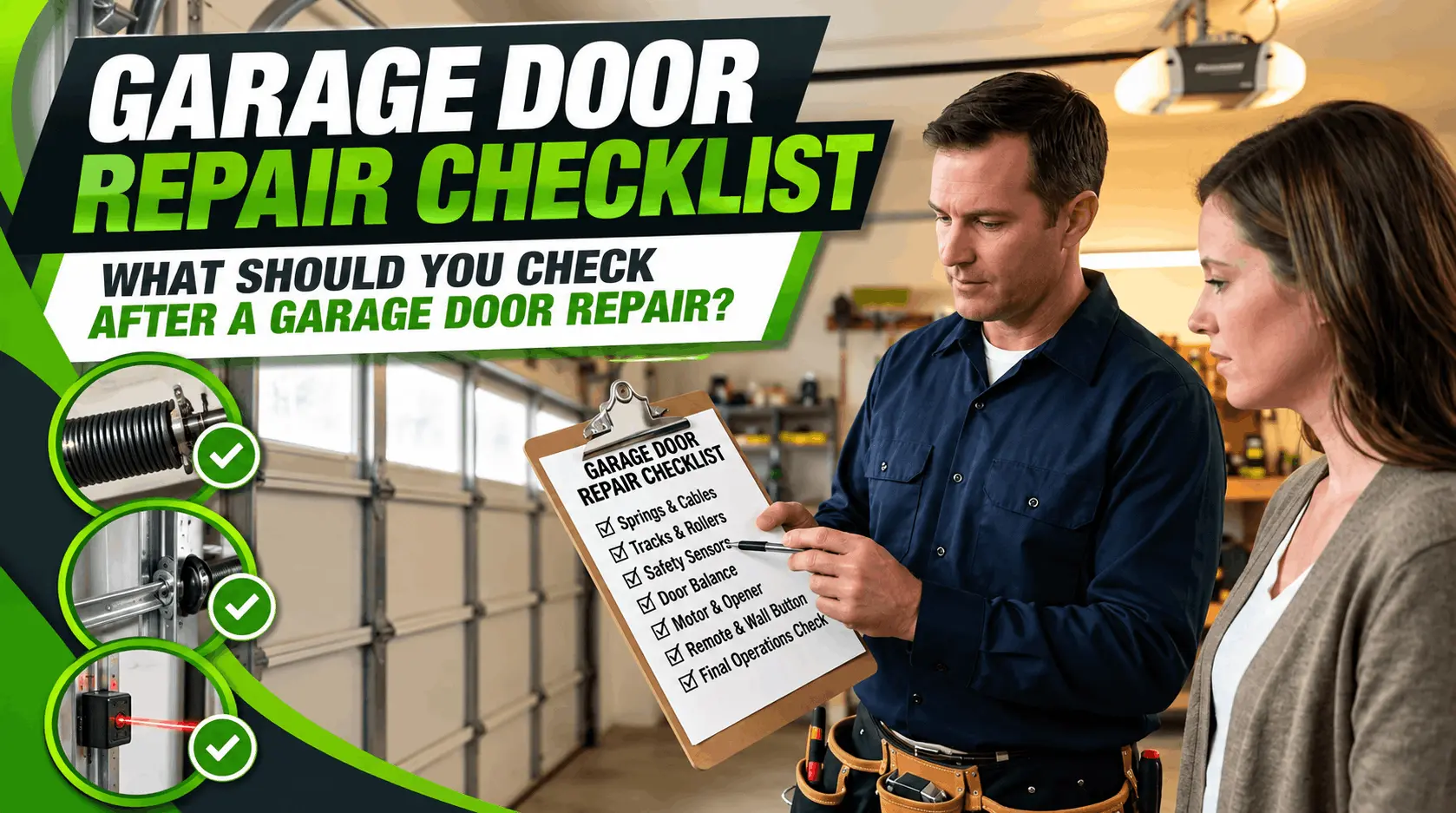
A thorough garage door maintenance checklist covers the parts of your door most likely to be affected by seasonal wear, springs, tracks, seals, hardware, and the opener itself, so nothing gets overlooked before temperatures drop. In The Woodlands, TX, winters are mild compared to much of the country, but the combination of occasional cold snaps, humidity, and heavy fall rain still puts real strain on a garage door’s moving parts. Running through this checklist now, rather than waiting until something stops working, is the difference between routine seasonal garage door maintenance and an unexpected repair call in January. Why a Seasonal Checklist Matters Before Winter Garage doors don’t fail all at once. Small issues, a slightly loose bolt, a hinge that’s lost its lubrication, a seal that’s started to crack, tend to build up quietly over months. Winter tends to be when those small issues finally show themselves, since cooler temperatures make metal contract slightly and can make existing wear more noticeable. A seasonal garage door maintenance checklist isn’t about fixing problems. It’s about catching them while they’re still minor, which is almost always cheaper and less disruptive than waiting for a full breakdown. Garage Door Springs Garage door springs carry most of the door’s weight and are one of the most important things to check before winter. A spring under strain for months at a time can start showing wear that isn’t always obvious just from looking at the door operate. What to check: Springs are under significant tension and aren’t something to adjust or replace without the right tools and experience. If you want to go deeper on this specific check, our guide on how to check garage door spring tension safely walks through it step by step, and our garage door tune-up checklist covers spring care alongside the rest of the system. Tracks and Rollers The tracks guide the door’s movement, and rollers keep that movement smooth. Both take on dirt, debris, and general wear over the course of a year. What to check: Weatherstripping and Seals Seals do more work than most homeowners give them credit for. Beyond keeping drafts out, a good seal keeps moisture, pests, and debris from getting into the garage in the first place. What to check: Worn weatherstripping is one of the easier and more affordable fixes on this entire checklist, and it’s worth doing before winter rather than after the first cold draft makes it obvious. Opener and Safety Sensors The opener is the part of the system doing the most repetitive work, and it’s worth confirming it’s still operating the way it should before you’re relying on it daily through the colder months. What to check: Hardware and Fasteners Bolts, hinges, and brackets loosen gradually just from the door’s regular use. It’s an easy thing to overlook since none of it is usually visible unless you’re specifically checking. What to check: This is one of the simpler garage door care tips on this list, but it’s also one of the most commonly skipped, mostly because a slightly loose bolt doesn’t cause an obvious problem until it does. For more detail on doing this correctly, see our posts on how to lubricate a garage door the right way and lithium vs. silicone grease for garage doors, which covers which product actually holds up best. Balance Test A simple balance test tells you a lot about how much strain your opener is under. With the door disconnected from the opener (using the manual release), lift it about halfway and let go. A properly balanced door should stay in place. If it falls or rises on its own, that usually points to a spring or cable issue that’s putting extra strain on the opener, one that’s worth having looked at before it leads to a bigger failure. Residential vs. Commercial Garage Door Maintenance Residential garage door maintenance and commercial garage door maintenance follow the same general checklist, but the frequency tends to differ significantly. A residential door might open and close a handful of times a day, while a commercial door on a busier property can see dozens of cycles, which naturally accelerates wear on springs, rollers, and the opener itself. If you’re maintaining a commercial property, it’s worth checking these same items more frequently, and considering a maintenance schedule built around actual usage rather than a fixed seasonal timeline. Quick Garage Door Tune-Up Recap If you’re working through this checklist yourself, here’s the short version to keep handy: Most of this can be done in under thirty minutes with basic tools, and it covers the parts of the door most likely to cause problems once winter sets in. When to Call a Professional Some parts of this checklist are safe and simple to handle yourself. Springs, cable tension, and anything involving the opener’s internal wiring are a different story, since getting these wrong can be genuinely dangerous, not just inconvenient. If your walkthrough turns up anything involving the springs, cables, or an opener that isn’t responding properly, it’s worth having it looked at rather than working around it through winter. A professional garage door maintenance visit covers everything on this checklist in more depth, including the parts that aren’t safe for a DIY fix. Keeping Your Garage Door Ready for Winter A garage door maintenance checklist doesn’t need to be complicated to be effective. Most issues that turn into a winter breakdown start as something small and easy to catch months earlier, which is really the entire point of running through one before the season changes. 2Quick Garage Doors has helped homeowners throughout The Woodlands, TX stay ahead of exactly these kinds of issues, from spring wear to opener problems, before they turn into a repair call in the middle of winter. If you’d rather have a professional run through this checklist for you, get in touch with our team and we’ll take care of it. How often should I run a garage door maintenance checklist? Twice a year is

Read More

How to Prevent Garage Door Rust and Corrosion

Garage door rust develops when moisture sits on unprotected metal long enough to start breaking it down, and in Texas, that happens faster than most homeowners expect. Between high humidity, heavy rain, and long stretches of heat that keep moisture trapped rather than letting it evaporate, garage door hardware takes a beating here in ways it wouldn’t in a drier climate. The good news is that most garage door rust and corrosion is preventable with a few consistent habits, and catching it early is far cheaper than dealing with it once it’s spread. If it’s been a while since your door had a proper look-over, a seasonal garage door maintenance visit is the easiest way to catch small spots before they become bigger ones. Why The Woodlands, TX Weather Is Especially Hard on Garage Doors The Woodlands doesn’t need coastal salt air to cause rust problems. Humidity alone is enough. When moisture in the air condenses on cool metal surfaces, especially overnight or during temperature swings between day and night, it creates a thin film of water that sits on exposed hardware for hours at a time. Add in heavy seasonal rain, and you get water splashing directly onto the bottom panel, tracks, and hardware every time a storm rolls through. Combine that with long, hot stretches where a garage can trap humidity rather than ventilate it, and you have close to ideal conditions for corrosion to take hold, particularly on any parts where the protective coating has worn thin or chipped. Common Signs of Garage Door Rust and Corrosion Rust doesn’t usually show up all at once. It tends to start small, in places that are easy to miss unless you’re specifically looking. Watch for these early signs: Catching any of these early is the difference between a quick cleanup and a hardware replacement. Where Garage Door Rust Typically Starts Rust doesn’t spread evenly across a door. It tends to concentrate in a few predictable spots, mostly wherever water collects or metal is left exposed. Hinges and rollers are frequent starting points, since they’re constantly moving and often lose their factory lubrication over time, leaving bare metal more exposed to moisture. The bottom panel takes the most direct water exposure of any part of the door, especially during heavy rain or when sprinklers hit it repeatedly. Tracks and brackets trap standing water more than homeowners realize, particularly if there’s any debris sitting inside the track that holds moisture against the metal. Torsion springs are less obvious but genuinely important to watch, since rust here doesn’t just look bad, it can weaken the spring’s structural integrity over time. Garage Door Materials That Hold Up Better in Texas Not all garage doors are equally vulnerable. If you’re replacing a door or hardware anyway, material choice makes a real difference in how much maintenance you’ll need going forward. Galvanized steel, which has a zinc coating bonded to the base metal, resists corrosion significantly better than uncoated steel. Aluminum doesn’t rust in the traditional sense at all, though it can still corrode under the right conditions, just more slowly. Vinyl and composite doors sidestep the rust issue entirely, though they come with their own trade-offs in durability and cost. For hardware specifically, look for hinges, rollers, and brackets labeled as corrosion-resistant or specifically rated for humid climates. It’s a small difference in upfront cost that pays off over several Texas summers. Step-by-Step Prevention Tips Preventing garage door rust doesn’t require anything complicated. It’s mostly about consistency. Clean the door regularly. A simple rinse with mild soap and water every few months removes dirt, pollen, and grime that can trap moisture against the surface. Dry off standing water after heavy rain. If water is pooling anywhere along the bottom panel or tracks, wiping it down once the storm passes prevents it from sitting for hours. Lubricate moving parts. Hinges, rollers, and springs should be lubricated every few months with a silicone-based spray rather than a heavier oil, which can actually attract more dust and grime over time. Touch up chipped paint promptly. Even small paint chips expose bare metal to moisture. A rust-resistant primer and matching touch-up paint keeps that exposure from spreading. Keep the tracks clear. Debris sitting in the track holds moisture in place. Clearing it out during routine cleaning prevents that buildup. Check the weatherstripping. A worn or gapped bottom seal lets more water reach the panel and hardware than it should. Replacing it when it starts cracking is a small fix that prevents a bigger one. Avoid harsh chemical cleaners. Some degreasers and household cleaners can strip protective coatings faster than they clean, which ironically speeds up corrosion rather than preventing it. When Garage Door Rust Becomes a Repair Issue Surface rust on a hinge or bracket is usually a maintenance fix. Rust that’s worked its way into a spring, a track’s structural mounting points, or the panel’s internal frame is a different situation entirely. Structural corrosion weakens the parts of the door that carry weight and tension, and that’s not something to wait on. A spring with visible rust and pitting, for example, is at higher risk of snapping under normal use, which is both a repair issue and a safety one. If you’re seeing rust anywhere beyond the surface, it’s worth having a garage door repair specialist take a look before it turns into a bigger failure. DIY Maintenance vs. Professional Inspection Regular cleaning, lubrication, and touch-up paint are all things most homeowners can handle themselves without any special tools. Where it’s worth bringing in a professional is for a full hardware inspection, particularly on springs, tracks, and anything load-bearing, since those are harder to properly assess without experience. A once or twice a year professional check gives you a second set of eyes on the parts that matter most, catching early corrosion in spots that are easy to overlook from the outside. Protecting Your Garage Door Against Texas Weather, Year-Round Garage door rust is one of

Read More

Wind-Rated Garage Doors: Do You Need One in The Woodlands?

A wind rated garage door is engineered and tested to withstand a specific amount of wind pressure without buckling, bowing, or separating from its track. For homeowners in The Woodlands, TX, the question isn’t whether hurricanes make landfall here directly. It’s whether the straight line winds, tropical storm remnants, and seasonal gusts this area does see are enough to justify the upgrade. If your current door is getting older or you’re planning a garage door installation soon anyway, this is worth factoring into that decision. Here’s what actually goes into it. What Does “Wind Rated” Actually Mean? A wind rating isn’t a marketing label. It’s a tested engineering spec, usually expressed in pounds per square foot (PSF), that tells you how much pressure a wind rated garage door can absorb before it fails structurally. Manufacturers test these doors under controlled conditions that simulate sustained wind and impact from debris, and the door is certified to a specific PSF threshold as a result. For comparison, a standard, non-reinforced residential garage door might handle somewhere around 10 to 15 PSF before showing stress. A properly wind rated garage door built for storm-prone regions can be certified well above that, often in the 30 to 50 PSF range or higher, depending on the model and reinforcement level. Does The Woodlands Actually Require Wind-Rated Garage Doors? This is where a lot of homeowners get confused, and it’s worth being straightforward about it. The Woodlands is not in a designated hurricane wind zone the way coastal communities like Galveston or Corpus Christi are, so there isn’t a blanket requirement forcing every homeowner here to install a certified wind rated garage door. That said, local building codes and HOA guidelines can still carry their own wind load requirements depending on your specific neighborhood, lot exposure, and whether your home was built or renovated after certain code updates. If you’re not sure what applies to your property, checking with your builder’s documentation or a local permitting office is the most reliable way to know for certain, rather than assuming either way. Signs Your Current Garage Door Wasn’t Built for Texas Storm Season Even without a strict local mandate, some doors are simply more vulnerable than others. A few signs it might be time to look into a wind rated garage door: None of these mean your door will fail in the next storm. They just mean it wasn’t built with wind resistance as a priority, which matters more the longer you plan to stay in the home. A local garage door technician can check for these signs during a routine visit and tell you honestly whether it’s a concern. Wind-Rated vs. Hurricane-Rated: Is There a Difference? These terms get used almost interchangeably, but there’s a subtle distinction worth knowing. A wind rated garage door refers specifically to a door tested for resistance to sustained wind pressure. A “hurricane rated” or “impact rated” door typically means it has also been tested against debris impact, simulating something like a piece of lumber or roofing material striking the door during a storm. A fully hurricane rated door usually meets both standards. A wind rated garage door may only be certified for pressure resistance. If storm debris is a real concern for your property, particularly if you’re near open lots, construction, or heavily wooded areas, it’s worth asking specifically which certification a door carries before assuming “wind rated” covers everything. Is the Upgrade Worth It for an Inland Community Like The Woodlands? This depends largely on how you weigh cost against risk. A wind rated garage door typically costs more upfront than a standard residential door, largely because of the reinforced steel, thicker gauge tracks, and additional structural bracing involved in meeting the certification. Against that upfront cost, consider what a door failure actually leads to: not just the cost of the door itself, but potential water intrusion, wind driven damage to whatever’s stored in the garage, and in worse cases, pressure related damage to the rest of the home’s structure. For many homeowners here, the calculation comes down to how exposed their specific property is (open lot versus tree-sheltered, older neighborhood versus newer construction with updated codes) and how long they plan to own the home. What to Look for When Choosing a Wind-Rated Garage Door If you decide the upgrade makes sense, a few things are worth confirming before you commit to a specific product: That last point matters more than most homeowners expect. A wind rated garage door is only as strong as the frame and track it’s mounted into, which is why professional installation isn’t a place to cut corners. An expert garage door technician will know how to set the track, bracing, and frame to actually deliver the rating the door is certified for. Getting a Straight Answer for Your Home Not every home in The Woodlands needs a fully wind rated garage door, and not every homeowner needs to spend the extra money on one. What’s worth doing is getting an honest assessment of your current door’s condition and how exposed your property actually is, rather than guessing either way. If you’d like a local garage door technician to take a look, get in touch with our team and we’ll walk you through what makes sense for your home specifically. Is a wind-rated garage door required by code in The Woodlands, TX? Not universally. The Woodlands isn’t in a designated coastal wind zone, but specific neighborhoods, HOAs, or newer builds may carry their own requirements. Checking your local permitting office or builder documentation is the most reliable way to confirm. How much more does a wind-rated garage door cost compared to a standard one? Costs vary by size, material, and PSF rating, but wind rated garage doors generally run higher than standard doors due to the reinforced steel and heavier duty tracking involved. A garage door technician can give you an accurate quote based on your specific opening. Can an existing garage door be

Read More

Hurricane Proof Garage Door Checklist for The Woodlands, TX

When a hurricane or tropical storm rolls through Southeast Texas, your garage door is usually the largest, weakest opening on your home, and if it fails, wind can rush inside and blow the roof or walls apart from the inside out. A hurricane proof garage door is built and reinforced to resist that wind pressure and flying debris, and even a standard door can be made safer with the right bracing, seals, and backup power. If you’re not sure where your own door stands, our team handles garage door inspections across The Woodlands and can walk you through exactly what needs attention. Below is a practical, room by room checklist Woodlands, TX homeowners can run through before storm season peaks. Why Your Garage Door Matters More Than You Think Most homeowners spend hurricane season worrying about their roof, windows, and fence line, and forget that the garage door is often the single largest structural opening on the house. A standard door isn’t built to handle sustained hurricane force wind. Once it buckles or blows in, the pressure has nowhere to go but up and out, which is why garage door failure shows up so often in post storm damage reports. The Woodlands sits inland from the Gulf Coast, but that doesn’t mean it’s immune. Remnants of tropical systems and straight line wind events still bring gusts strong enough to compromise an aging or improperly braced door, especially on homes with wider double car openings. Is Your Current Garage Door Hurricane Rated? Before you do anything else, find out what you’re actually working with. If you can’t find a rating label or you’re not sure what you’re looking at, that’s a reasonable first question to ask a technician during a routine maintenance visit rather than waiting until a storm is already in the forecast. The Pre-Storm Garage Door Checklist Run through these before hurricane season peaks, and again any time a storm watch is issued for your area. 1. Inspect the Track and Rollers Loose or bent tracks are one of the most common reasons a door comes off its rails under wind pressure. Walk the full length of both tracks and look for gaps, rust, or visible warping. 2. Check the Weatherstripping and Bottom Seal Cracked or brittle seals let wind driven rain into the garage even before a full structural failure. If the rubber along the bottom or sides is stiff, torn, or pulling away, it needs to be replaced. 3. Test the Auto-Reverse and Sensors Storm prep is also a good moment to confirm the door’s basic safety systems are working. You’ll likely be opening and closing it more than usual as you move vehicles and supplies in and out. A quick check of your garage door’s safety sensors now saves a headache later. 4. Look at the Bracing Horizontal or vertical retrofit braces can meaningfully increase how much wind pressure an existing door can handle without needing full replacement. This is worth a conversation with a technician if your door doesn’t already have factory rated bracing. 5. Confirm the Opener Has a Manual Release If the power goes out mid storm or right after, you’ll want to know how to disengage the opener and operate the door manually, and that it hasn’t seized up from age or lack of use. 6. Consider a Battery Backup A battery backup keeps the opener functional during outages, which matters if you need to move a vehicle out before or after a storm and don’t want to operate a heavy door by hand in bad weather. 7. Clear the Perimeter Loose branches, patio furniture, and yard debris near the garage door become projectiles in high wind. Clear anything within throwing distance of the door before a storm arrives. 8. Schedule a Professional Inspection Early Waiting until a storm is 48 hours out means everyone else in The Woodlands is calling for the same thing. A pre-season inspection gives you time to actually fix what’s found, rather than just documenting it. Retrofit or Replace? What Homeowners in The Woodlands Should Weigh Not every home needs a brand new door to be storm ready. In many cases, a retrofit kit, reinforced struts, stronger track brackets, and upgraded rollers, brings an existing door much closer to a true wind rated standard at a fraction of the cost of full replacement. Replacement makes more sense when: A technician can walk your specific door and opening and tell you honestly which side of that line you’re on. This isn’t a one size fits all decision, and our installation team can talk through options that fit your home and budget. After the Storm: What to Check Once the weather clears, don’t assume “it still opens and closes fine” means “it’s fine.” Minor shifts after a storm often don’t cause an immediate failure. They show up as a bigger repair a few months later if left unaddressed. Get Your Garage Door Storm-Ready Before the Next Watch Is Issued A hurricane proof garage door isn’t something you want to be sorting out with a storm already on the radar. Our technicians serve homeowners throughout The Woodlands and the surrounding area, checking track alignment, seals, bracing, and opener condition so you know exactly where you stand before the weather turns. Does a hurricane proof garage door cost more than a standard one? Yes, generally. Factory wind rated doors and retrofit kits both carry a premium over standard doors, but the cost is typically far less than repairing storm damage to the door, the garage’s contents, and potentially the home’s structure. Can I make my existing garage door hurricane rated without replacing it? In many cases, yes. Reinforcement kits, including added struts, upgraded track hardware, and stronger rollers, can bring an existing door closer to wind rated performance. Whether it’s a good fit depends on the door’s age and current condition. How do I know what wind rating I need in The Woodlands, TX? Wind load requirements vary by local

Read More