
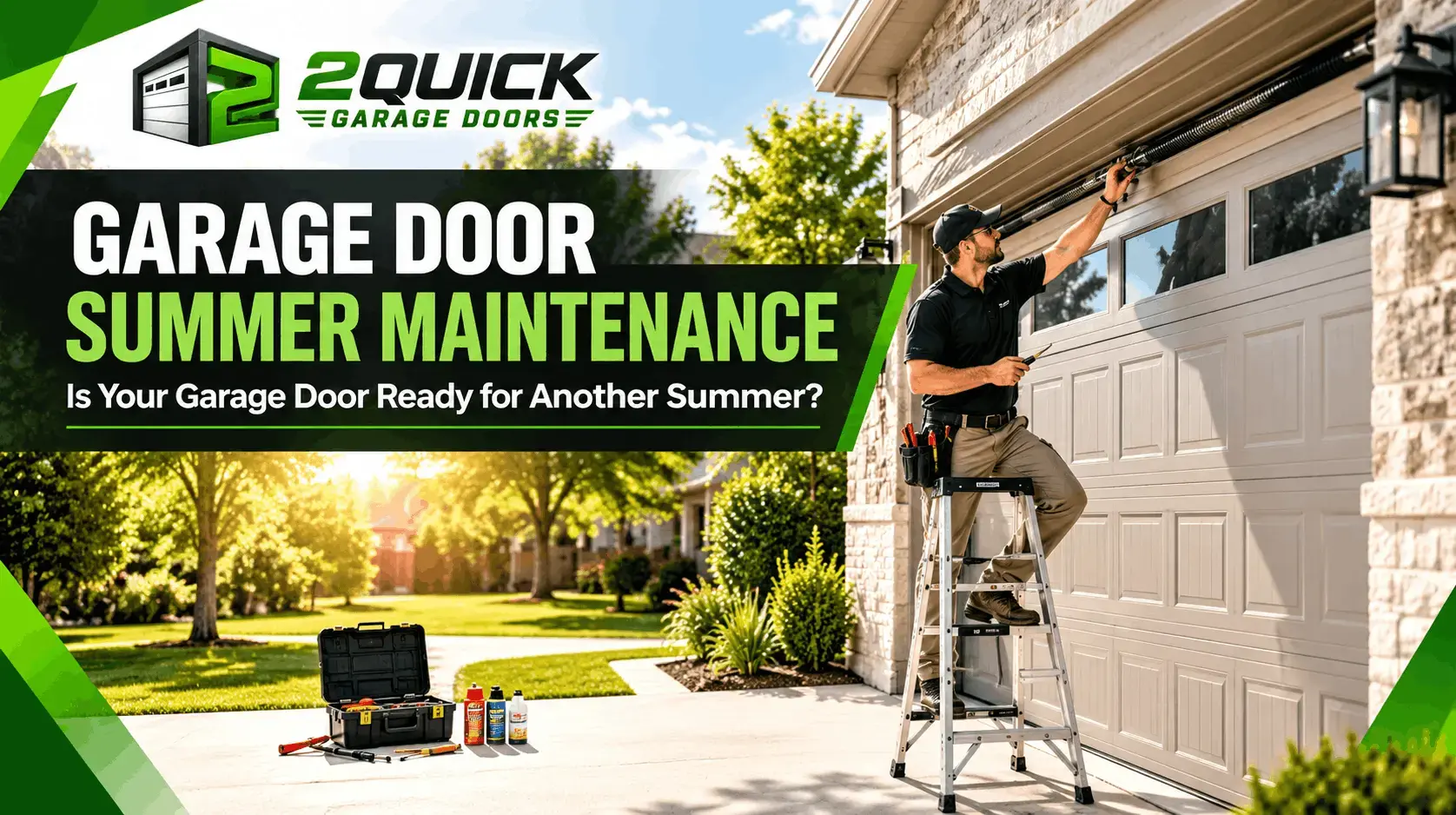
Garage Door Summer Maintenance: Is Your Garage Door Ready for Another Summer?
Summer can put more stress on your garage door than you might expect. Frequent daily use, heat, humidity, and changing temperatures can affect moving components, seals, hardware, and the garage door opener.
That does not mean your garage door will automatically develop problems during summer. However, seasonal maintenance gives you an opportunity to identify worn components before they turn into a more disruptive failure.
A good garage door summer maintenance routine does not have to be complicated. The goal is to inspect the major components, look for signs of wear, test the safety features, and address small problems before they affect the entire system.
Here is what to check before another summer of regular garage door use.
Why Does Garage Door Maintenance Matter During Summer?
Your garage door may be one of the most frequently used moving systems on your property. Every time it opens and closes, the springs, rollers, hinges, cables, tracks, and opener work together.
Over time, normal operation can cause components to wear.
Summer is a useful time to perform a garage door inspection because you can identify developing problems before they become an unexpected breakdown.
A seasonal inspection can also help you notice changes such as unusual noises, slower movement, uneven travel, vibration, or a door that does not seal properly against the floor.
1. Check the Garage Door Springs
Garage door springs carry a significant portion of the door’s weight and help the opener move the door through its opening and closing cycle.
Look for obvious signs of damage, rust, gaps, or unusual changes in the spring assembly. You should also pay attention to changes in how the garage door feels when operating.
A door that suddenly feels heavier than usual or struggles to move may have a problem with the springs or another part of the lifting system.
Do not attempt to adjust, tighten, remove, or replace garage door springs yourself. These components can remain under substantial tension even when the door is not moving.
If you suspect a spring problem, professional inspection is the safer approach.
2. Inspect the Garage Door Cables
Garage door cables work alongside the springs to help support and move the door.
During your seasonal check, look for obvious fraying, broken strands, corrosion, or a cable that appears loose or out of position.
A damaged cable should not be pulled, reattached, or adjusted manually. A cable problem can be connected to spring tension and other components, so attempting a quick DIY repair can create additional safety risks.
If you notice a damaged or disconnected cable, stop operating the door and arrange for professional garage door repair.
3. Look at the Garage Door Rollers
Rollers allow the garage door sections to travel along the tracks. Worn rollers may produce squeaking, grinding, rattling, or other unusual sounds. You may also notice that the door does not travel as smoothly as it once did.
Check the rollers for visible damage and listen while the door operates.
If the rollers are worn, cracked, or no longer moving properly, replacement may help restore smoother operation.
Do not confuse normal operating sounds with a problem that requires immediate replacement. The condition of the entire system should be considered before deciding which component needs attention.
4. Inspect the Garage Door Tracks
The tracks guide the rollers as the garage door moves.
Check both tracks for visible dents, bends, loose hardware, or debris that could interfere with roller movement.
The tracks should remain properly positioned and aligned. A track that has been hit by a vehicle or otherwise damaged can affect the way the entire door travels.
Avoid trying to force a bent track back into position yourself. Garage door components work together under tension, and incorrect adjustments can create additional problems.
If the track is visibly damaged or the door is moving unevenly, professional inspection is recommended.
5. Check the Hinges and Garage Door Hardware
The hinges connect the individual sections of a sectional garage door and allow them to move as the door travels.
During a summer garage door maintenance check, look for loose or damaged hinges, brackets, bolts, and other visible hardware.
You may also notice excessive movement or unusual noise when the door operates.
Do not simply tighten every piece of hardware you can see. Some components are connected to parts of the garage door system that should only be adjusted by a trained professional.
The objective of a seasonal inspection is to identify potential problems, not to make adjustments that could affect the door’s balance or safety.
6. Examine the Garage Door Weather Seal
The bottom weather seal helps close the gap between the garage door and the floor.
Over time, the seal can become cracked, flattened, brittle, or damaged.
A worn garage door weather seal may allow outside air, moisture, dust, and insects to enter around the bottom of the door.
Close the door and visually inspect the seal along its entire length. Look for gaps or sections that no longer make proper contact with the floor.
Replacing a damaged weather seal can be a relatively straightforward maintenance task, but the correct replacement depends on the garage door design and existing retainer.
7. Inspect the Side and Top Weatherstripping
The bottom seal is not the only part responsible for limiting gaps around the garage door.
Inspect the weatherstripping around the sides and top of the door. Look for sections that have become compressed, cracked, loose, or separated from the frame.
Effective weatherstripping can help reduce unwanted air movement and keep the garage environment more protected from outside conditions.
If the weatherstripping is damaged, replacing it may improve the door’s seal without requiring any major garage door work.
8. Test the Garage Door Balance
Garage door balance is important because the springs are designed to counterbalance the weight of the door.
A door that is properly balanced should not feel excessively heavy or difficult to move manually.
If you are qualified to perform the manufacturer’s recommended balance test safely, follow the instructions for your specific garage door system. Otherwise, have a professional perform the inspection.
Do not adjust the springs simply because the door feels heavy.
An incorrect spring adjustment can create a dangerous condition and may also damage other garage door components.
9. Inspect the Garage Door Opener
The opener should also be part of your seasonal garage door maintenance checklist.
Listen for changes in the opener’s operation. Grinding, excessive vibration, unusual clicking, or inconsistent movement can indicate a developing problem.
Check that the opener responds correctly to the wall control and remote. If your system includes a battery backup, check its condition according to the manufacturer’s instructions.
Also make sure the opener’s safety features are functioning properly. If the opener has become unreliable or repeatedly stops working, professional opener troubleshooting may be necessary.
10. Test the Garage Door Safety Sensors
Safety sensors are an important part of the opener system.
The two photo-eye sensors should be positioned correctly and kept free from dirt or other obstructions.
Check that the sensor area is clear and that the indicator lights appear normal for your particular opener.
You can also follow the manufacturer’s recommended procedure for testing the sensors.
If the door repeatedly reverses, refuses to close, or the sensors appear damaged or misaligned, do not bypass the safety system.
A garage door should never be operated by intentionally defeating a safety feature.
11. Listen for Changes in Garage Door Operation
One of the easiest parts of a garage door inspection is simply listening to the system.
Pay attention to sounds you did not hear previously.
Grinding may point toward worn components. Squeaking can come from moving parts that need attention. Rattling may indicate loose hardware. A sudden popping sound can have several possible causes, including issues involving springs or other components.
The sound alone does not always identify the problem, so avoid replacing parts based only on what you hear. A change in noise is a reason to investigate the system more closely.
12. Watch How the Door Moves
Your garage door should move smoothly through its normal travel.
Watch for:
- Uneven movement
- Shaking
- Jerking
- Tilting
- Slower-than-normal travel
- Reversing unexpectedly
- Stopping before reaching the floor
- Excessive vibration
These symptoms can have different causes. Springs, cables, rollers, tracks, hinges, the opener, and other components can all affect how the door moves.
If the behavior is new, it is better to investigate the cause rather than continue operating the door until the problem becomes worse.
Should You Lubricate Your Garage Door?
Garage door lubrication can help reduce friction in appropriate moving components, but more lubricant is not always better.
Use a product recommended for garage door components and follow the manufacturer’s instructions.
Lubrication may be appropriate for certain rollers, hinges, bearings, or other moving components depending on the system.
Avoid spraying lubricant indiscriminately across the entire garage door. Do not apply lubricant to safety sensors, tracks, or surfaces where it can attract dirt and debris unless the manufacturer specifically recommends it.
If you are unsure which components should be lubricated, professional garage door maintenance can include inspection and appropriate lubrication.
Do You Need a Garage Door Tune-Up Before Summer?
A garage door tune-up can be worthwhile if the door has become noisier, less smooth, or more difficult to operate.
A professional tune-up can involve inspecting the major components, checking the door’s operation, evaluating hardware, examining the opener, and identifying wear that may not be obvious during a quick visual inspection.
It is especially useful when the garage door has not been inspected for an extended period or when you have noticed small changes in its performance.
The purpose is not simply to lubricate everything. A proper inspection should look at how the entire system is functioning.
What Garage Door Problems Should You Not Ignore?
Some problems are more than routine maintenance issues.
Stop using the garage door and seek professional assistance if you notice a broken spring, damaged or disconnected cable, severely bent track, door that has come off its track, major panel damage, or a door that has become dangerously heavy.
You should also take action if the garage door suddenly drops, closes unevenly, or behaves unpredictably.
Continuing to operate a damaged garage door can put additional stress on the opener and other components.
Garage Door Maintenance vs. Garage Door Repair
Maintenance is intended to identify and address developing problems before they become major failures.
Repair is needed when a component has already failed or the garage door is no longer operating correctly.
For example, cleaning the safety sensors and inspecting the weather seal can be part of routine maintenance. A broken spring, damaged cable, failed opener, or severely damaged track requires repair rather than routine maintenance.
Knowing the difference can help you respond appropriately when something changes.
How Often Should You Perform Garage Door Maintenance?
There is no single maintenance schedule that works for every garage door.
Usage is an important factor. A garage door used several times every day will experience more operating cycles than a door that is rarely opened.
The age and condition of the system also matter.
A practical approach is to perform basic visual checks regularly and arrange professional maintenance when the door shows signs of wear or when the manufacturer’s recommendations call for inspection.
Seasonal checks can be particularly useful because they give you a simple opportunity to review the condition of the major components.
A Simple Garage Door Summer Maintenance Checklist
Before another summer of regular use, check the following:
Springs: Look for visible damage or unusual changes in door operation.
Cables: Watch for fraying, broken strands, corrosion, or cables that appear out of position.
Rollers: Listen for excessive noise and inspect for visible damage.
Tracks: Check for dents, bends, debris, or obvious alignment problems.
Hinges and hardware: Look for damaged or unusually loose components.
Weather seals: Inspect the bottom seal and side/top weatherstripping for gaps or deterioration.
Opener: Test normal operation and listen for unusual sounds.
Safety sensors: Make sure the sensor area is clean and unobstructed.
Balance: Pay attention to changes in how easily the door moves.
Overall operation: Watch for shaking, jerking, uneven movement, or unexpected reversing.
This checklist is not a substitute for professional repair when a component is damaged or unsafe.
How Can You Prevent Garage Door Problems This Summer?
The best approach is to pay attention to small changes before they become major problems.
Do not ignore new sounds simply because the door still opens. Do not continue using a door that suddenly feels unusually heavy. Do not bypass safety sensors because they are preventing the door from closing.
Keep the garage door area clear, follow the manufacturer’s maintenance recommendations, and address damaged components promptly.
Regular preventive maintenance can help you identify problems earlier and keep the entire garage door system operating more consistently.
When Should You Call a Garage Door Professional?
You should consider professional service when you cannot identify the cause of a problem, when a component is visibly damaged, or when the repair involves springs, cables, major track adjustments, or other high-tension components.
Professional garage door maintenance near me can also be useful when you want the complete system inspected rather than checking individual components yourself.
A technician can evaluate the door, opener, hardware, and moving components together and explain which issues require immediate attention and which can be monitored.
Final Thoughts
Summer is a good time to make sure your garage door is ready for another season of regular use.
A proper garage door summer maintenance routine should cover more than just lubrication. Springs, cables, rollers, tracks, hinges, seals, the opener, safety sensors, and overall door movement should all be considered.
Some maintenance tasks can be handled through basic inspection, while repairs involving springs, cables, damaged tracks, or other high-tension components should be left to a qualified professional.
By paying attention to changes in your garage door’s operation and addressing problems early, you can reduce the chance of an unexpected breakdown and keep the system working safely.
Garage Door Summer Maintenance FAQs
How often should I perform garage door summer maintenance?
A basic visual inspection can be performed regularly, while professional maintenance should follow the manufacturer’s recommendations and the condition and usage of your garage door. Seasonal inspections can be a useful way to identify developing problems.
What should be included in a garage door maintenance checklist?
A thorough checklist can include springs, cables, rollers, tracks, hinges, hardware, weather seals, the opener, safety sensors, balance, and overall door movement.
Does summer heat damage garage doors?
Heat and changing environmental conditions can contribute to wear on certain components and seals, but the impact depends on the garage door, materials, usage, and existing condition. Regular inspection helps identify problems before they become more serious.
Should I lubricate my garage door every summer?
Not necessarily. Lubrication requirements vary by component and manufacturer. Use an appropriate garage door lubricant only where recommended rather than applying it to every part of the system.
When should I schedule professional garage door maintenance?
Consider professional maintenance when the door becomes noisy, moves unevenly, feels unusually heavy, shows visible component wear, or has not been inspected for an extended period. Professional service can also help identify issues before they become larger repairs.