
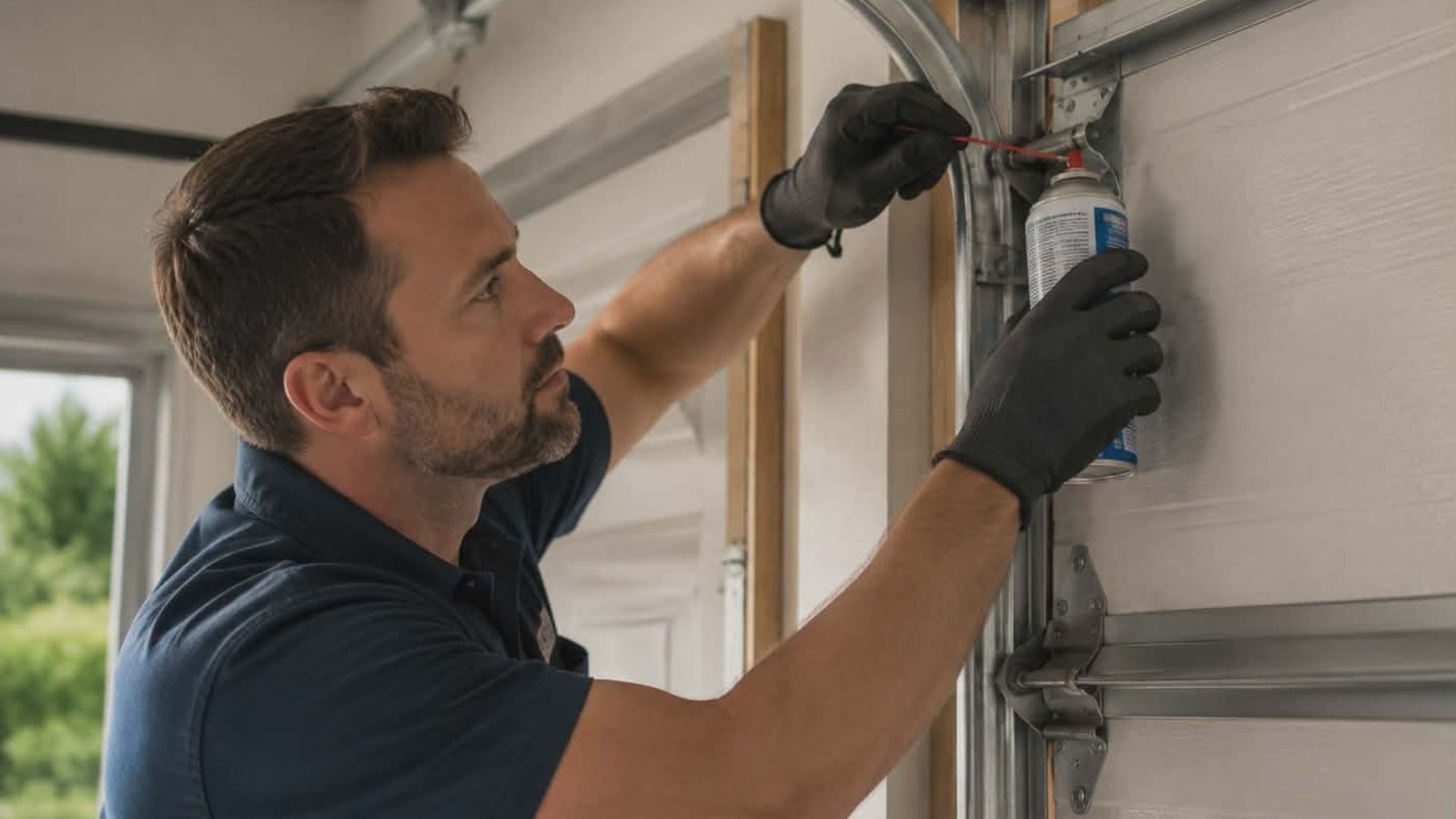
How to Lubricate a Garage Door the Right Way (and What to Avoid)
Your garage door works hard every single day. It opens, closes, and takes the full brunt of weather, humidity, and constant mechanical stress. Over time, that wear and tear adds up, and one of the simplest ways to keep things running well is proper lubrication.
However, most homeowners either skip this step entirely or do it incorrectly. Using the wrong lubricant for your garage door can actually attract dirt and debris, cause buildup, and lead to costly repairs down the road. This guide walks you through exactly what to do, what to avoid, and how to extend the life of your garage door with minimal effort.
Why Lubrication Matters More Than You Think
A well-lubricated garage door does more than just operate smoothly and quietly. It reduces friction between metal-to-metal contact points, prevents rust from forming on key components, and lowers the risk of premature failure on springs, rollers, and hinges.
In a climate like The Woodlands, Texas, where humidity can swing dramatically between seasons, moisture is a real threat. Without proper lubrication, grime and grit work their way into the moving parts and grind them down faster than you would expect. Noise reduction, smooth operation, and a longer lifespan all start with a consistent lubrication routine.
What You Will Need Before You Start
Before you lubricate your garage door, gather the right supplies. Choosing the right lubricant makes all the difference.
Recommended products:
- White lithium grease – This is one of the best options for garage doors. White lithium grease clings well to metal surfaces, does not drip, and holds up under torque and friction. It works great on torsion springs, hinges, and roller bearings.
- Silicone lubricant or silicone-based spray lubricant – A solid choice for nylon wheels and plastic components. Silicone lubricant will not degrade nylon rollers the way petroleum-based products can.
- CRC or similar lithium-based spray lubricant – Easy to apply and effective on hinges, cables, and bearings.
What to avoid using:
- WD-40 (as a lubricant) – WD-40 is a water-displacement product, not a true lubricant. It can temporarily silence a noisy door, but it also attracts dirt and dust, which turns into a grimy paste that accelerates wear.
- Motor oil – Too thick, too messy, and it will attract dirt quickly.
- Standard grease or heavy axle grease – Tends to build up, collect grit, and create more problems than it solves.
Step-by-Step Guide to Lubricating Your Garage Door
Step 1: Inspect and Clean First
Start by disconnecting the door opener and manually operating the door to check for loose hardware, damaged rollers, or anything that looks out of place. Wipe away old lubricant, dirt, and debris, and any grime from each component using a clean rag. Applying fresh lube over old lubricant defeats the purpose.
Step 2: Lubricate the Torsion Springs
The torsion spring sits above the door and bears a significant amount of tension every time you open or close your garage door. Apply white lithium grease or a lithium-based spray lubricant along the length of each torsion spring. Be careful and precise here. If a torsion spring looks cracked or worn, stop and call a professional. Torsion spring work carries real risk, and garage door spring repair and replacement should not be a DIY experiment.
Step 3: Work on the Hinges
Each hinge connects the door panels and allows them to bend as the door moves along the track. Apply lubricant directly to the hinge pin and the joint of each hinge. Door hinges are one of the biggest sources of squeaking, and a properly lubricated hinge pin makes an immediate difference. If your door hinges are made of steel, use white lithium grease. For nylon or plastic hinges, silicone is the safer option.
Step 4: Lubricate the Rollers
Steel rollers with exposed roller bearings need lubrication on the bearing itself, not the roller body. For nylon wheels with sealed bearings, just apply a small amount to the bearing area.
Avoid getting lubricant on the tracks, as this can cause the door to slip or become unbalanced.
Step 5: Do Not Forget the Cables and Pulley
The cable runs along the sides of the door and connects to the torsion system. Apply a light coat of spray lubricant along each cable. Spray the pulley as well, since friction there affects how smoothly the door operates. This is often an overlooked part of the overhead door system.
Step 6: Wipe Off Any Excess
After applying lubricant to each section, wipe off any excess with a clean cloth. Excess lubricant drips onto the floor, collects dirt and dust, and can work its way onto the tracks where you do not want it.
Step 7: Test the Door
Plug the door opener back in and open and close your garage door several times to work the lubricant into each joint and bearing. Listen for any remaining noise. If things still grind or feel stiff, something may need a closer look.
How Often Should You Lubricate?
A good rule of home maintenance is to lubricate every 6 months. If you use your garage door heavily or notice it sounding rough, bumping it every 3 months is reasonable. Keeping things well-lubricated is far cheaper than ignoring the problem until something breaks.
If you’re unsure about a component or notice something off, contact 2Quick Garage Doors Woodlands for professional garage door maintenance in The Woodlands.
When Lubrication Is Not Enough
Sometimes, noise, resistance, or rough movement is not a lube issue. It could be a failing spring, a bent track, or a worn-out door opener. If you have done everything right and the door still does not operate correctly, it is time to call in someone who knows what they are looking at.
For repairs or opener services, 2Quick Garage Doors Woodlands offers repair and installation throughout The Woodlands. Whether it is a minor fix or a full component swap, having an experienced installer handle it keeps your door safe and working the way it should.
Conclusion
Lubricating your garage door is one of the easiest ways to protect a system you rely on every day. Use the right products, focus on the hinges, rollers, torsion spring, cables, and pulleys, and stick to a regular schedule. Avoid WD-40 as a lube and keep it off the tracks.
A little consistency goes a long way toward quiet operation and a door that lasts. If you ever need a hand, 2Quick Garage Doors Woodlands is ready to help – just call (346) 574-0359.