
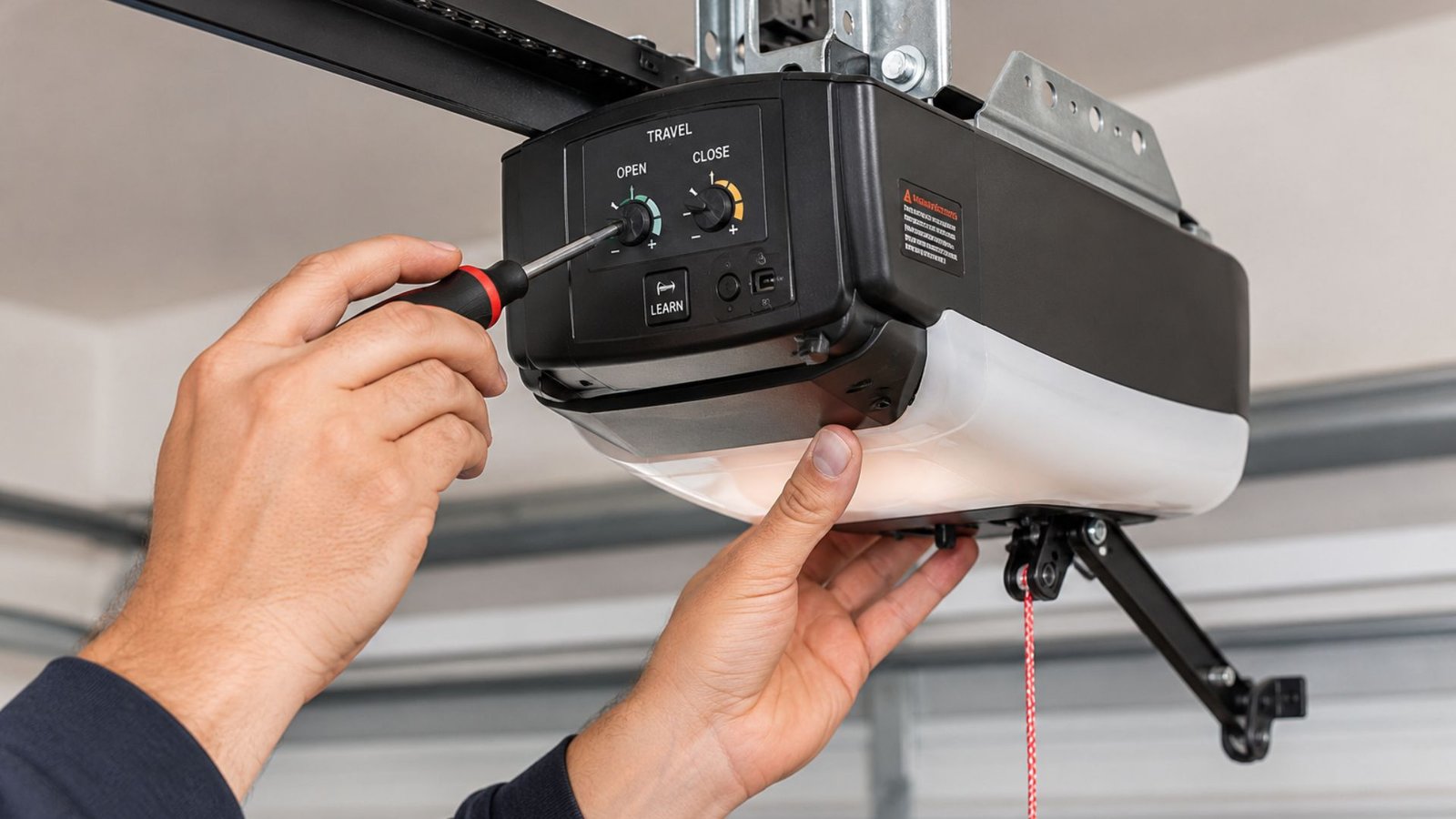
Garage Door Opener Travel Adjustment: What Homeowners Should Know
If your garage door stops too early, presses too firmly against the floor, or reverses before closing, the travel settings may need attention. These settings control where an automatic opener stops the door in the open and closed positions.
However, not every door problem is caused by incorrect travel settings. Similar symptoms can result from sensor issues, worn hardware, damaged springs, track problems, or an unbalanced door. This guide explains how garage door opener travel adjustment works, what homeowners can safely check, and when professional service is the better choice.
What Is a Garage Door Opener Travel Adjustment?
Travel settings tell your opener where the door should stop when opening and closing. When these positions are set correctly, the door should open far enough for safe entry and close against the floor without excessive pressure.
When the settings are incorrect, the door may:
- Stop before reaching the floor
- Press down too firmly when closing
- Open only part of the way
- Reverse after reaching the floor
- Leave a visible gap at the bottom
Many openers use separate settings for the open and closed positions. Some models use accessible adjustment controls, while newer systems may use programming buttons or digital controls. Because procedures differ by brand and model, always consult the owner’s manual before making changes.
Signs the Travel Settings May Need Attention
A travel adjustment may be worth investigating when the door operates smoothly but does not stop in the correct position. Common signs include:
- The door closes almost completely but leaves a small gap at the floor.
- The door reaches the floor and immediately reverses.
- The door opens smoothly but stops before reaching the desired height.
- The opener was recently installed or reprogrammed.
These symptoms do not prove that the travel settings are the only issue. A door that moves unevenly, makes unusual noises, appears crooked, or becomes difficult to lift may have a mechanical problem that requires professional inspection.
Safety Precautions Before Checking Opener Settings
Garage doors are heavy moving systems, and some components operate under high tension. Before checking any opener setting, keep these safety precautions in mind:
- Keep children and pets away from the garage during testing.
- Never place yourself beneath a moving or partially open door.
- Do not touch, loosen, or adjust springs, cables, brackets, or tracks.
- Never open the motor housing or attempt internal electrical repairs.
- Review the owner’s manual for your exact opener model before adjusting any controls.
- Stop immediately if the door moves unevenly, binds, appears damaged, or makes grinding, popping, or snapping sounds.
If you need to check manual door movement, make sure the door is closed before using the emergency release. A door with a damaged spring or balance issue can fall unexpectedly when disconnected from the opener.
How Travel Adjustments Work on Manual-Control Openers
Some garage door openers use accessible controls marked for the open and close travel positions. These controls may be labeled with terms such as “UP,” “DOWN,” “OPEN,” or “CLOSE.”
The exact direction and amount of adjustment vary by model. Instead of relying on general instructions, follow the steps in your owner’s manual. In most cases, the general process includes:
- Identify your opener brand and model number.
- Locate the travel-setting instructions in the owner’s manual.
- Observe whether the door stops too high, too low, too early, or too late.
- Make only the small adjustment specified for that model.
- Run a complete opening and closing cycle after each change.
- Confirm that the door stops correctly without excessive pressure against the floor.
Avoid making several adjustments at once. Small changes followed by testing make it easier to determine whether the setting improved the door’s operation.
How Travel Programming Works on Digital Openers
Many newer garage door openers use programming buttons or electronic controls rather than traditional adjustment screws. These systems may guide the user through setting the desired open and closed positions, followed by an operating test.
Because programming sequences vary, use the instructions written for your specific opener. A sequence for one Genie, Chamberlain, LiftMaster, or other branded unit may not apply to another model.
After setting the positions, operate the door through a complete cycle. The door should open to the appropriate height, close evenly, and stop at the floor without excessive downward pressure.
Test the Safety-Reversal System After Adjustment
After adjusting travel settings, test the opener’s reversal system. Place a 2-by-4 board flat on the garage floor in the closing door’s path, then operate the door using the wall control or remote.
The door should contact the board and reverse. If it does not reverse properly, stop using the opener until it has been adjusted according to the owner’s manual or repaired by a qualified professional.
This test is important because a door that closes without reversing properly can pose a serious safety risk.
Problems That May Look Like Travel-Setting Issues
Not every door that stops incorrectly needs a travel adjustment. The following concerns may indicate a different problem:
The Door Reverses Before Reaching the Floor
Obstructed or misaligned safety sensors, track resistance, debris, or another opener issue may cause premature reversal. Clean the sensor area and check for visible obstructions, but contact a professional when the issue continues.
The Door Moves Unevenly
A door that tilts, shakes, or moves unevenly may have damaged cables, worn rollers, track problems, or a spring issue. Travel adjustment will not correct these mechanical concerns.
The Door Is Heavy or Difficult to Lift
A properly functioning spring system helps counterbalance the door. If the door feels unusually heavy or will not stay in position during a safe manual check, avoid operating it and schedule professional service.
The Motor Runs, but the Door Does Not Move Properly
This may indicate an opener, trolley, gear, belt, chain, or door-hardware problem. Continuing to operate the system can potentially worsen the issue.
When to Call a Professional
Contact a garage door technician when:
- The door moves unevenly or appears crooked.
- A spring or cable appears broken or damaged.
- The door makes grinding, popping, or scraping noises.
- The door does not reverse properly during the safety test.
- The motor continues running after the door reaches its stopping point.
- You cannot find or follow the correct instructions for your opener model.
- Adjusting the travel settings does not solve the problem.
A technician can inspect the opener and door system, determine whether the stopping positions are the real issue, and complete repairs or calibration safely.
How Often Should You Check Door Operation?
Pay attention to how your garage door moves each time you use it. If it begins stopping in the wrong position, reversing unexpectedly, or making new sounds, schedule an inspection or review the manufacturer’s troubleshooting guidance.
You should also test the opener’s safety-reversal function monthly using a 2-by-4 board placed flat in the door’s path. Regular testing can help identify safety concerns before they become more serious.
Conclusion
Garage door opener travel adjustment helps control where your door stops when opening and closing. When the settings are the source of the problem, a careful model-specific adjustment may restore proper operation.
However, a reversing, uneven, heavy, or noisy door may require more than a simple setting change. Do not attempt spring, cable, or internal opener repairs yourself.
For garage door opener repair, installation, calibration, or safety testing in The Woodlands and surrounding areas, contact 2Quick Garage Doors Woodlands at (346) 574-0359 to schedule service.