
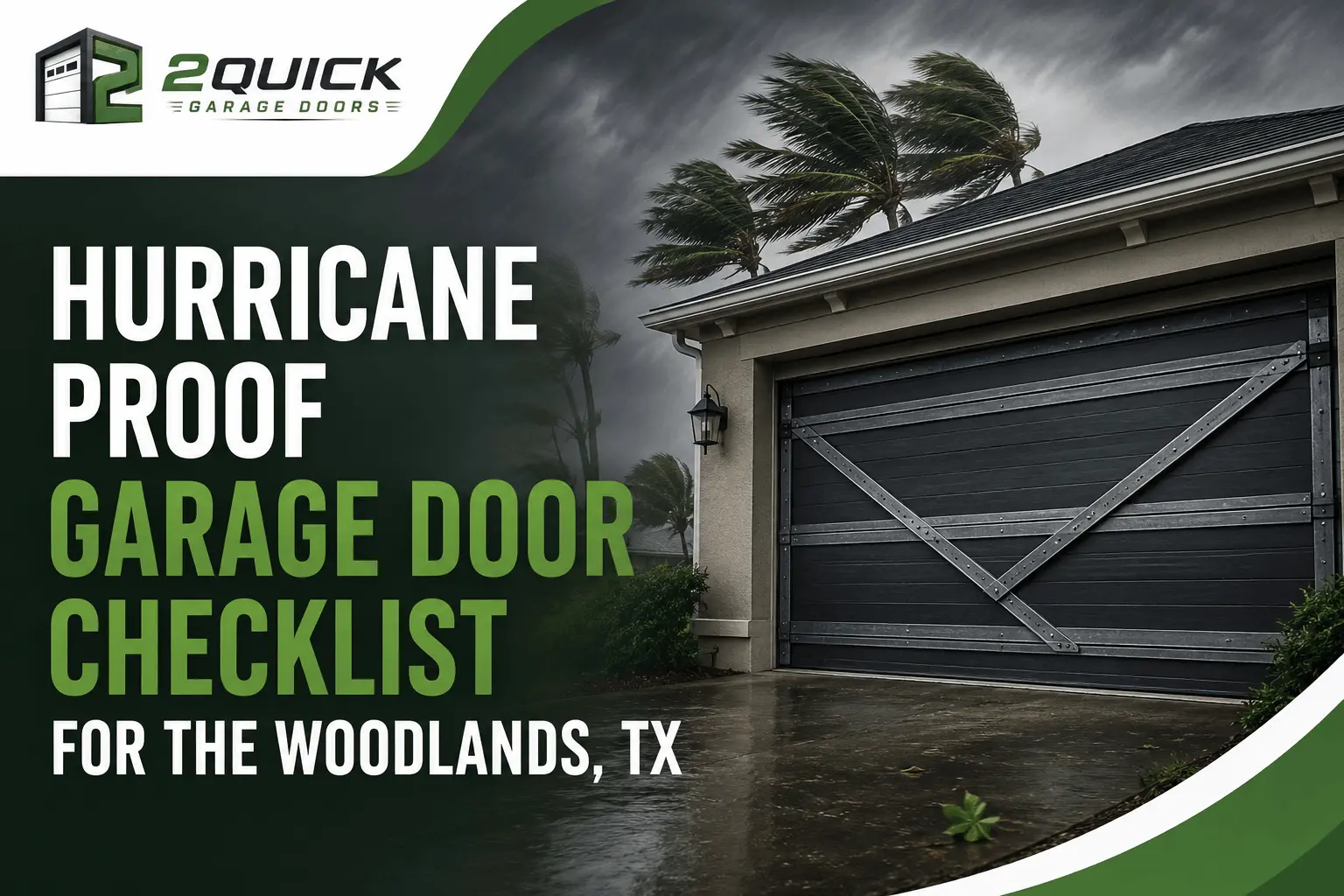
When a hurricane or tropical storm rolls through Southeast Texas, your garage door is usually the largest, weakest opening on your home, and if it fails, wind can rush inside and blow the roof or walls apart from the inside out. A hurricane proof garage door is built and reinforced to resist that wind pressure and flying debris, and even a standard door can be made safer with the right bracing, seals, and backup power. If you’re not sure where your own door stands, our team handles garage door inspections across The Woodlands and can walk you through exactly what needs attention. Below is a practical, room by room checklist Woodlands, TX homeowners can run through before storm season peaks.
Why Your Garage Door Matters More Than You Think
Most homeowners spend hurricane season worrying about their roof, windows, and fence line, and forget that the garage door is often the single largest structural opening on the house. A standard door isn’t built to handle sustained hurricane force wind. Once it buckles or blows in, the pressure has nowhere to go but up and out, which is why garage door failure shows up so often in post storm damage reports.
The Woodlands sits inland from the Gulf Coast, but that doesn’t mean it’s immune. Remnants of tropical systems and straight line wind events still bring gusts strong enough to compromise an aging or improperly braced door, especially on homes with wider double car openings.
Is Your Current Garage Door Hurricane Rated?
Before you do anything else, find out what you’re actually working with.
- Check the label. Most hurricane rated garage doors carry a label on the inside of the door, or a sticker near the track, listing the wind load rating and the code it was tested against.
- Know your door’s age. Doors installed before the mid 2000s in this region are less likely to meet current wind load standards, even if they look structurally sound.
- Understand what “wind rated” actually means. Wind rated garage doors are engineered and tested to resist a specific pressure, measured in pounds per square foot, without buckling inward or pulling away from the track. It’s not a marketing term, it’s a tested spec.
If you can’t find a rating label or you’re not sure what you’re looking at, that’s a reasonable first question to ask a technician during a routine maintenance visit rather than waiting until a storm is already in the forecast.
The Pre-Storm Garage Door Checklist
Run through these before hurricane season peaks, and again any time a storm watch is issued for your area.
1. Inspect the Track and Rollers
Loose or bent tracks are one of the most common reasons a door comes off its rails under wind pressure. Walk the full length of both tracks and look for gaps, rust, or visible warping.
2. Check the Weatherstripping and Bottom Seal
Cracked or brittle seals let wind driven rain into the garage even before a full structural failure. If the rubber along the bottom or sides is stiff, torn, or pulling away, it needs to be replaced.
3. Test the Auto-Reverse and Sensors
Storm prep is also a good moment to confirm the door’s basic safety systems are working. You’ll likely be opening and closing it more than usual as you move vehicles and supplies in and out. A quick check of your garage door’s safety sensors now saves a headache later.
4. Look at the Bracing
Horizontal or vertical retrofit braces can meaningfully increase how much wind pressure an existing door can handle without needing full replacement. This is worth a conversation with a technician if your door doesn’t already have factory rated bracing.
5. Confirm the Opener Has a Manual Release
If the power goes out mid storm or right after, you’ll want to know how to disengage the opener and operate the door manually, and that it hasn’t seized up from age or lack of use.
6. Consider a Battery Backup
A battery backup keeps the opener functional during outages, which matters if you need to move a vehicle out before or after a storm and don’t want to operate a heavy door by hand in bad weather.
7. Clear the Perimeter
Loose branches, patio furniture, and yard debris near the garage door become projectiles in high wind. Clear anything within throwing distance of the door before a storm arrives.
8. Schedule a Professional Inspection Early
Waiting until a storm is 48 hours out means everyone else in The Woodlands is calling for the same thing. A pre-season inspection gives you time to actually fix what’s found, rather than just documenting it.
Retrofit or Replace? What Homeowners in The Woodlands Should Weigh
Not every home needs a brand new door to be storm ready. In many cases, a retrofit kit, reinforced struts, stronger track brackets, and upgraded rollers, brings an existing door much closer to a true wind rated standard at a fraction of the cost of full replacement.
Replacement makes more sense when:
- The door is already older than 15 to 20 years
- The track or frame shows structural rust or warping
- You’re in a wider double car opening, which sees more wind load than a single door
- You want a factory wind load rating rather than a retrofit approximation
A technician can walk your specific door and opening and tell you honestly which side of that line you’re on. This isn’t a one size fits all decision, and our installation team can talk through options that fit your home and budget.
After the Storm: What to Check
Once the weather clears, don’t assume “it still opens and closes fine” means “it’s fine.”
- Look for hairline cracks or panel separation you may not notice from the driveway
- Check that the tracks haven’t shifted, even slightly, out of alignment
- Confirm the sensors are still aligned and functioning
- Listen for new grinding, scraping, or popping sounds during operation
Minor shifts after a storm often don’t cause an immediate failure. They show up as a bigger repair a few months later if left unaddressed.
Get Your Garage Door Storm-Ready Before the Next Watch Is Issued
A hurricane proof garage door isn’t something you want to be sorting out with a storm already on the radar. Our technicians serve homeowners throughout The Woodlands and the surrounding area, checking track alignment, seals, bracing, and opener condition so you know exactly where you stand before the weather turns.
Does a hurricane proof garage door cost more than a standard one?
Yes, generally. Factory wind rated doors and retrofit kits both carry a premium over standard doors, but the cost is typically far less than repairing storm damage to the door, the garage’s contents, and potentially the home’s structure.
Can I make my existing garage door hurricane rated without replacing it?
In many cases, yes. Reinforcement kits, including added struts, upgraded track hardware, and stronger rollers, can bring an existing door closer to wind rated performance. Whether it’s a good fit depends on the door’s age and current condition.
How do I know what wind rating I need in The Woodlands, TX?
Wind load requirements vary by local building code and how exposed your home’s setting is. A technician familiar with the area can check your specific requirements against your current door.
Is a battery backup necessary for hurricane season?
It’s not required, but it’s a practical addition if you rely on your garage as a primary entry point or need to move a vehicle during a power outage.
What’s the most common reason garage doors fail during storms?
Track separation and panel buckling under sustained wind pressure are the most common failure points, especially on older or non-reinforced doors.
One thought on “Hurricane Proof Garage Door Checklist for The Woodlands, TX”
Pingback: Wind Rated Garage Doors: Do You Need One in The Woodlands?