
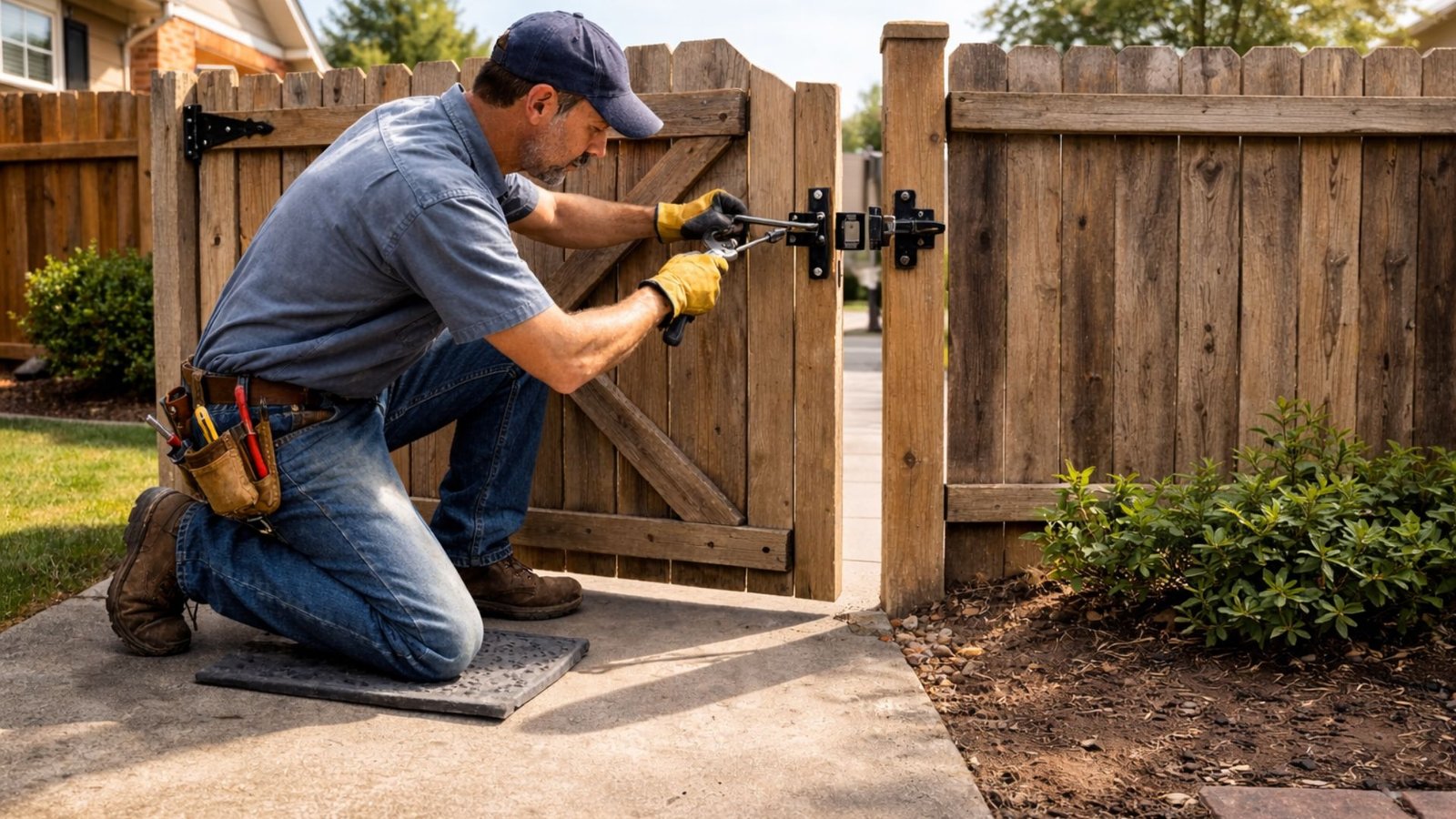
How To Fix A Gate That Won’t Latch And Make It Close Like New
A gate that will not latch is more than just annoying. It leaves your yard open, affects security, and puts extra stress on the entire fence. You close it, hear a dull thud, and it springs back open. Or the latch almost catches, but sits just a little off.
If you are wondering how to fix a gate that will not latch, you are usually dealing with a simple mechanical issue. Most problems come down to sag, loose hardware, or misalignment between the latch and striker. The good news is that many of these problems can be corrected with basic tools and careful adjustment.
Let’s walk through what is really going on and how to fix it properly.
Why Your Gate Won’t Latch in the First Place
When a gate refuses to close like it used to, it is usually because something shifted. Over time, the weight of the gate pulls downward. Changes in weather across The Woodlands can cause wood to expand or contract. Metal parts may shift, rust, or loosen.
Here are the most common causes:
- Loose hinge hardware
- Gate sag due to the weight of the gate
- A misaligned latch and striker
- A leaning fence post
- Worn or bent latch components
Understanding the root issue helps you solve the right problem instead of guessing.
Step 1 – Check for Gate Sag
Stand back and look at the top of the gate. Does it look level with the fence rail? If the latch side appears lower than the hinge side, your gate likely has sag.
Sag happens when the hinge side cannot properly support the weight. This is especially common on a wooden gate exposed to the weather.
How to Fix a Sagging Gate
Start simple.
- Tighten each screw on the hinge with a wrench or drill.
- If the screw holes are stripped, remove the screw, add wood glue to the hole, insert a small piece of wood or packing, then reinsert the screw securely.
- If that fails, replace old hardware with thicker stainless steel screws for a better grip.
If sag continues, install a diagonal brace across the back of the gate. A diagonal brace should run from the bottom hinge side up to the opposite side at the top of the gate. This helps support the weight and prevents further sag.
For heavier wooden or steel frame designs, a tension cable with turnbuckles can help. Tighten the turnbuckle for a small adjustment until the alignment improves. Some people use a 2×4 temporarily as a wedge while making adjustments.
If the frame is badly twisted or showing rot, it may be time to rebuild or reinforce sections before attempting to fix the latch again.
Step 2 – Inspect the Latch and Striker Alignment
If the gate looks level but will not latch, the issue is often alignment between the latch and the striker plate mounted on the fence post.
Close the gate slowly and watch where the latch bolt hits. Is it too high? Too low? Offset slightly to one side?
Even a small misalignment can prevent the bolt from sliding into place.
How to Align the Latch
You have two options:
- Move the latch
- Move the striker
Most minor problems are solved when you move the latch slightly up or down.
- Loosen the mounting screws
- Adjust the position
- Tighten securely
If the mounting holes are worn out, fill them with wood glue and allow it to dry before reinstalling.
For metal brackets, you may need new mounting holes made with a drill bit slightly smaller than the screw diameter. Always drill pilot holes to avoid cracking wood.
If your latch includes a bracket and bolt fastener with a nut and washer setup, slight adjustment may be as simple as loosening the nut, repositioning the hardware, and tightening again.
Make sure the striker catches cleanly without forcing the gate upward or downward. Forcing it will create long-term stress on hinges.
Step 3 – Check the Fence Post Stability
Sometimes the issue is not the gate at all. It is the fence post.
Grab the post and gently push. If it moves, even slightly, that movement can throw the latch out of alignment. Posts set in soil may shift over time.
A leaning post affects the vertical angle of the entire opening. That changes how the gate swing lines up with the latch side.
Minor movement can sometimes be corrected by anchoring the fence post more securely with additional support or reinforcing the concrete. Severe movement might mean resetting the post completely.
If a metal pole is involved, check the anchor bolts at ground level.
Step 4 – Examine Hinges and Hardware
The hinge controls how the gate moves. Worn hinges can shift position over time.
Look for:
- Bent hinge plates
- Rust buildup
- Elongated screw holes
- Loose bolt fastener connections
Sometimes simply tightening or replacing a hinge will correct everything. In other cases, you may need to replace worn hardware entirely.
Make sure you secure the hinges firmly into solid wood or steel. If the frame is weak, add a metal brace for added strength.
When the Gate Frame Is the Problem
If you are constantly adjusting but the problem returns, the frame itself may be stressed or warped.
Over time, exposure to the weather and moisture creates expansion, contraction, and possible rot. Decorative picket designs can shift slightly. Even steel frame or tubing systems can bend under pressure.
Look at the horizontal and vertical sections carefully. If the structure is pulling apart at joints or showing cracks, you may need to replace major sections or choose to rebuild.
In rare cases, improper installation from the beginning creates long-term offset issues that simple latch adjustments cannot solve.
Common Situations Homeowners Mention
In The Woodlands, we often hear variations of the same story:
- “The left gate used to close fine, but now it rubs and will not latch.”
- “After heavy weather, my fence gate stopped catching.”
- “The latch hits but pops back open.”
Each of these comes down to structure, hinge condition, or alignment correction.
Think of your gate like a small door. If a door frame shifts even slightly, it affects how the latch catches. The same concept applies here.
Quick Troubleshooting Checklist
If you want a fast recap, here is where to look:
- Check for sag at the top and bottom
- Inspect hinge tightness
- Adjust latch or striker position
- Confirm fence post stability
- Look for rot or structural stress
Work step by step. Avoid random changes. Small, careful adjustments usually works better than major alterations.
When to Call for Professional Gate Repair
Some gate problems are simple. Others require experienced repair.
If you notice severe sag, structural cracks, major rust, a damaged steel frame, or repeated alignment failure, it may be time for expert help. A professional can rebuild unstable sections, replace worn hardware, and ensure everything lines up correctly.
If you are in The Woodlands and prefer guidance from trained technicians, 2Quick Garage Doors Woodlands provides experienced help with gates and fencing systems. You can learn more about their professional gate repair services in Woodlands, TX.
Their team understands how climate, soil movement, and daily use affect gates locally.
Sometimes a fast, skilled adjustment saves you hours of frustration.
Final Thoughts – Make Your Gate Close Like New Again
A gate that will not latch is usually asking for attention, not replacement. In most cases, a careful fix involving hinge tightening, latch alignment, or adding a diagonal brace solves the issue.
Take your time. Watch how the latch meets the striker. Support the weight properly. Reinforce weak points before they worsen.
And if the problem keeps coming back, do not ignore it. Ongoing misalignment creates extra wear, which can lead to bigger repair needs later.
Whether you tackle the adjustment yourself or call a trusted local expert, restoring your gate so it closes smoothly and securely is absolutely possible. A properly working gate should swing easily, latch cleanly, and give you peace of mind every time it shuts.