
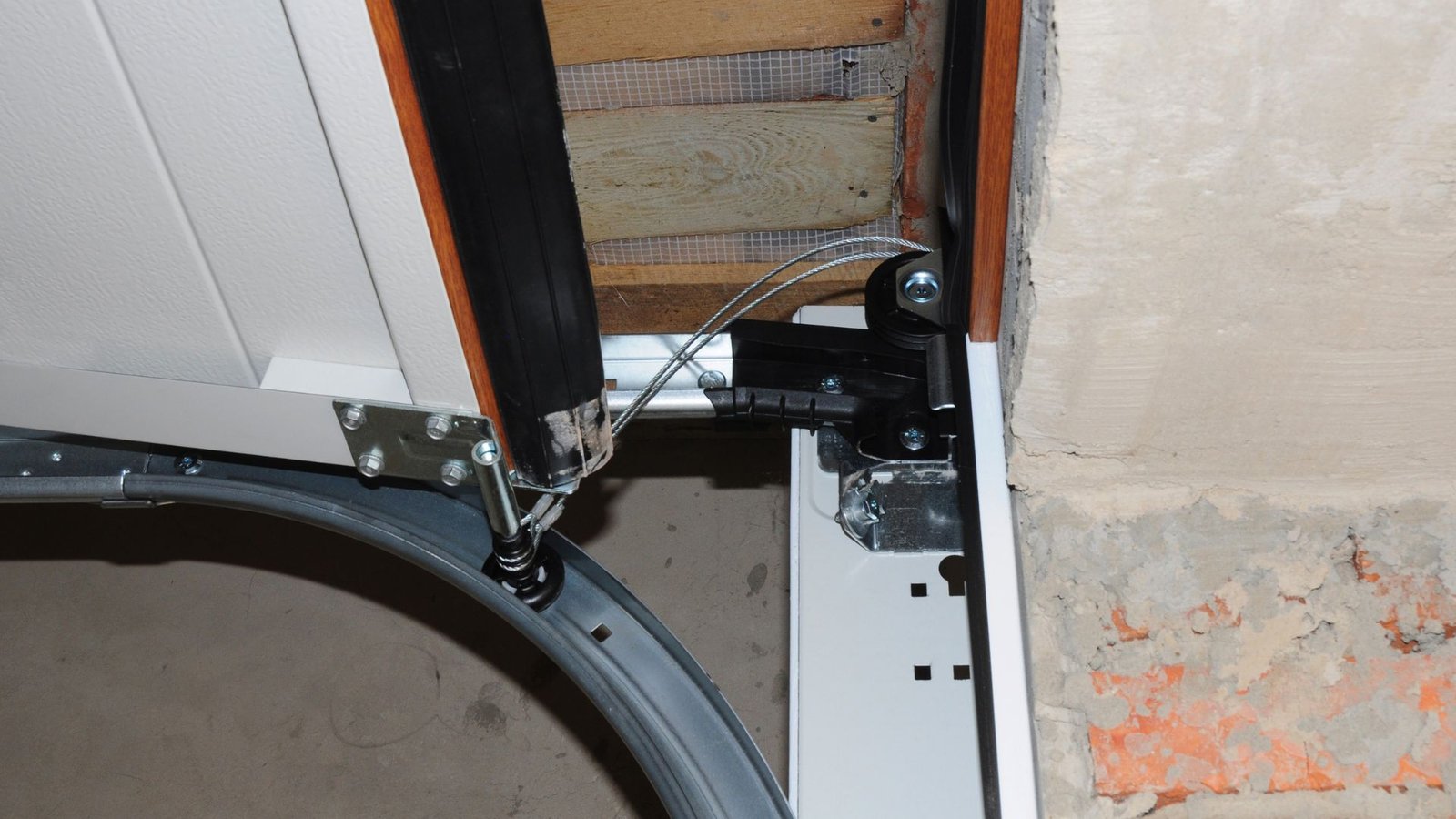
Garage Door Track Alignment: Signs It’s Off and How to Fix It Fast
Your garage door worked fine yesterday. Today, it sounds like a car dragging its bumper across gravel. Or maybe it stopped halfway up and refused to budge. Before you blame the garage door opener or assume you need a new door entirely, check the tracks first.
Garage door track alignment is one of the most common – and most overlooked – causes of door problems. The good news? If you catch it early, it is often fixable without a full replacement.
What Does Garage Door Track Alignment Actually Mean?
Your garage door moves along two metal tracks – one on each side of the door opening. These tracks guide the rollers as the door travels up and down and then back along the ceiling. When these tracks are perfectly straight and level, the door glides smoothly without friction or resistance.
When alignment is off, even slightly, the door can bind, wobble, jump off track, or refuse to open or close properly. Think of it like a car with a bent axle – it might still move, but not without causing serious damage over time.
Signs Your Garage Door Track Is Out of Alignment
It pays to look for signs early. The longer misalignment goes unaddressed, the more wear and tear builds up on the rollers, hinges, brackets, and springs.
- The door makes grinding noises. If you hear scraping or grinding as the door moves, a roller may be pressing against a bent or shifted section of track. That kind of metal-on-metal friction is a red flag.
- The door moves unevenly or shakes. Watch the door movement from a safe distance. If one side rises faster than the other, or if the door looks off-center, the tracks probably are not sitting at the same height or angle.
- You can see gaps between the roller and the track. Look for gaps where the roller sits inside the track channel. A properly aligned track holds the roller snugly. Visible space means something has shifted.
- The door stops or reverses on its own. Many automatic opener systems are designed to detect resistance. If the tracks are misaligned, the door might stop mid-cycle or reverse unexpectedly because the motor senses the extra tension.
- The door won’t open at all. In more severe cases, misalignment can cause rollers to slip out of the track entirely. At that point, the door is stuck – period.
Why Garage Door Tracks Go Out of Alignment
Understanding the cause helps you prevent it from happening again. Tracks can shift for several reasons.
Physical impact is one of the most common. Backing your car into the door, or even a hard bump against the frame, can knock a bracket loose or bend the track. Every day wear and tear on the bolts that secure the track brackets to the wall also plays a role – over time, vibration loosens the hardware slowly.
Spring tension also affects alignment indirectly. If you have broken springs, the door weight is no longer balanced properly, which puts uneven pressure on the tracks. That imbalance, over time, can shift the track accordingly.
Temperature swings can cause the steel tracks to expand and contract slightly, especially in older residential garage setups. Add in years of humidity, and you have rust weakening the bracket screws and the track itself.
How to Adjust Garage Door Tracks: A Step-by-Step Guide
Before you start, understand this: some adjustments are well within DIY territory. Others – especially anything involving spring tension or major structural damage – should go straight to a garage door technician. If there is any doubt, do not risk it.
What You Will Need
- A wrench or socket set
- A rubber mallet
- A spirit level
- A step ladder
- Safety glasses
Steps to Fix Basic Track Misalignment
- Step 1: Disconnect the opener. Disconnect the opener first by pulling the emergency release cord. This ensures the automatic opener does not activate while you are working. You want full manual control.
- Step 2: Test the door manually. Start with the door closed, then lift it by hand while observing where it binds or resists; this shows where adjustments are needed.
- Step 3: Loosen the bolts on the track brackets. Use a wrench to loosen the bolts – specifically, use a wrench to loosen the bolts on the bracket sections near where the problem exists. You do not need to remove them fully. Loosening them allows you to shift the track.
- Step 4: Check the vertical track. Use a level to check the vertical track on both sides. Adjusting the vertical track is usually where most residential issues begin. The track should run perfectly plumb from the bottom of the track up to the curve where it meets the horizontal section.
- Step 5: Adjust the track. Once you have loosened the bolts, gently tap the track into the correct position using a rubber mallet. Use a rubber mallet rather than a regular hammer to avoid denting the steel. Check the vertical alignment with your spirit level as you go.
- Step 6: Check the horizontal track. Move your attention to the horizontal track that runs along the ceiling. It should slope slightly downward toward the back of the garage – usually about a quarter-inch drop per foot of track length. Use a level here, too.
- Step 7: Tighten the track bolts and screws. Once everything looks aligned, tighten the track bolts securely. Be careful to avoid over-tightening, which can warp the bracket or strip the screw thread. Tighten the screws firmly, but stop when resistance is solid.
- Step 8: Align the tracks and test the door. Align the tracks one final time with a visual check, then manually test the door. It should glide smoothly through its full range of motion without binding. If it does, reconnect the opener and run a powered test.
Adjusting Your Garage Door’s Lower Track Area
Pay close attention to the lower track brackets and the bottom of the track near the floor. This area often collects debris and can shift slightly at the base. Tap the bottom of the frame molding to ensure the stop molding is flush and the weatherstripping seals properly when the door is closed.
Also, ensure the gap between the door and the track is consistent – the roller should sit snugly in the channel without rubbing against the sides. Door rubbing along the track length is a sign that the tracks need more adjustment.
When DIY Is Not Enough
A DIY approach works well for minor adjustments. But some situations call for a professional. If the track is visibly bent and cannot be straightened with a rubber mallet, it likely needs to be replaced. If you disconnect the opener and find it impossible to lift the door manually due to spring issues, that is a separate and dangerous problem involving spring tension.
Overhead door systems carry significant weight and use high-tension components. A garage door repair professional has the tools, training, and experience to handle alignment issues that go beyond bracket adjustments. Attempting overhead door track repair without proper knowledge can cause injury or worsen the damage.
Conclusion
Garage door track alignment problems are easier to fix when you catch them early. Look for signs like grinding noises, uneven movement, or rollers slipping, and act before small issues become costly repairs. For straightforward adjustments, adjusting garage door tracks yourself is a reasonable option with the right tools. But when the problem runs deeper, trust a qualified team to handle it right. The team at 2Quick Garage Doors Woodlands is ready to help – call (346) 574-0359.