
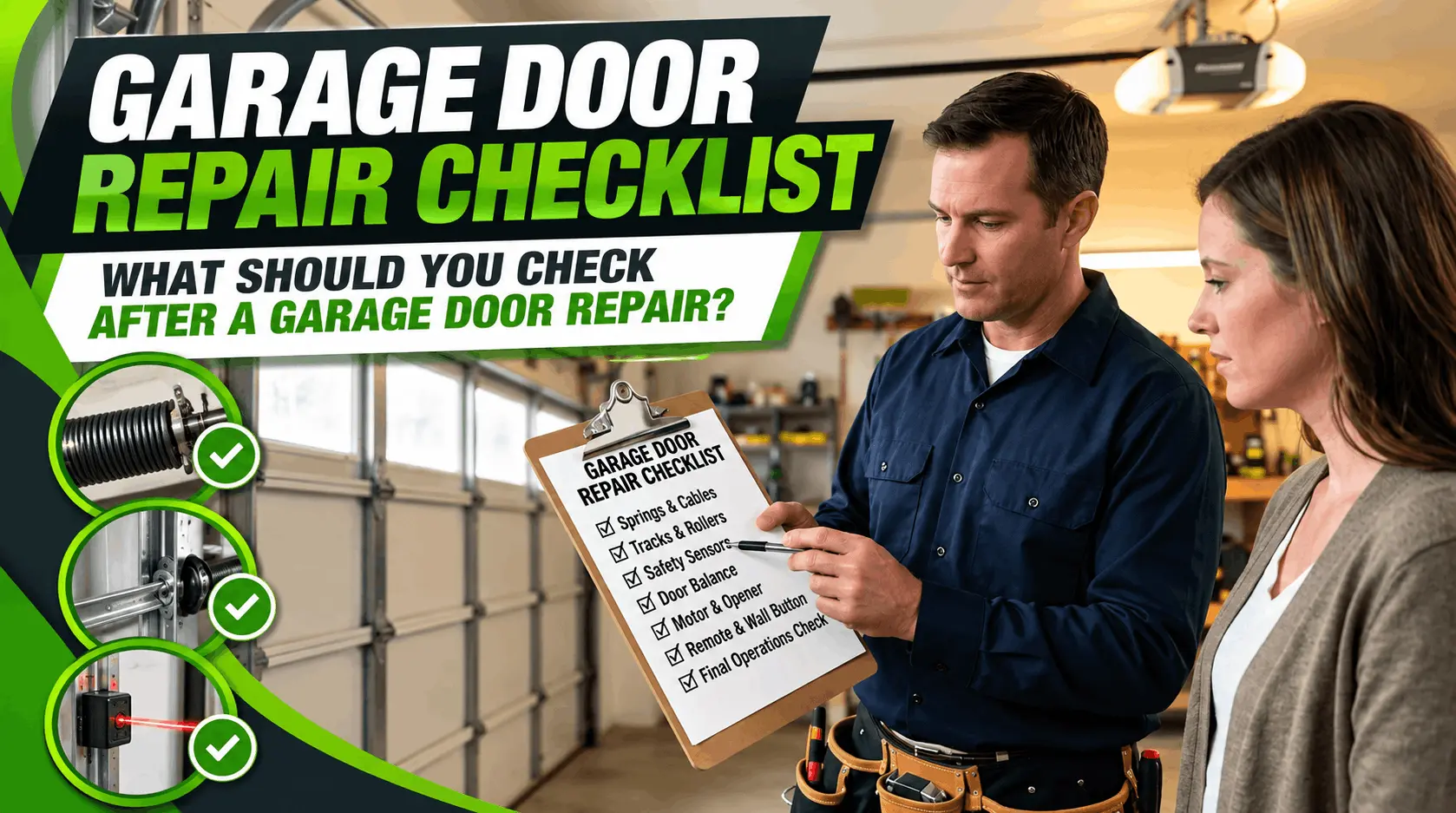
Garage Door Repair Checklist: What Should You Check After a Garage Door Repair?
Getting a garage door repaired is not necessarily the end of the process. Once the technician finishes the work, it is worth spending a few minutes checking how the entire door operates. A repair may involve one specific component, but the garage door is a connected system where springs, cables, rollers, tracks, hinges, the opener, and safety components all work together.
Using a garage door repair checklist after service gives you a simple way to make sure the door is operating as expected. You do not need to take the door apart or adjust mechanical components yourself. Instead, focus on its movement, sounds, alignment, and safety features.
Whether the repair involved a broken spring, damaged cable, worn rollers, an opener problem, track alignment, or another issue, knowing what to check after garage door repair can help you recognize anything that still needs attention.
Why Should You Inspect a Garage Door After a Repair?
A garage door can appear to be working again while another issue is still affecting its operation. For example, replacing a damaged cable may restore movement, but worn rollers or misaligned tracks could still cause unusual noise or resistance.
This is why a basic garage door repair inspection is useful after service. The purpose is not to second-guess the technician or perform another repair. It is simply to confirm that the door moves smoothly and that the repaired system behaves normally.
A properly operating garage door should open and close consistently without excessive shaking, unusual sounds, sudden stops, or visible alignment problems. The opener should not appear to struggle unnecessarily, and the door should respond correctly to its safety features.
If something seems different after the repair, it is better to mention it early rather than continuing to operate the door until the issue becomes more serious.
Garage Door Repair Checklist: What Should You Check After Service?
1. Watch the Garage Door Open and Close
The first and most important check is to watch the complete operating cycle. Use the wall control or remote and observe the door from the beginning of its movement until it is fully open and then completely closed.
Pay attention to whether the door moves at a consistent speed. A repaired garage door should not suddenly jerk, hesitate, shake, or stop without an obvious reason. It should also travel through the tracks without appearing to lean to one side.
If the repair involved springs, cables, rollers, tracks, or another mechanical component, watching several complete cycles can give you a better idea of whether the repair restored normal operation.
A small amount of operational noise is normal, but a new grinding, scraping, banging, or repeated popping sound should not simply be ignored.
2. Pay Attention to Garage Door Balance
Garage door balance is an important part of proper operation because the spring system helps counterbalance the weight of the door.
If a garage door becomes difficult to lift, moves unevenly, or seems unusually heavy after a repair, there could be an issue with the spring system or another mechanical component.
You should not attempt to adjust spring tension yourself. Garage door springs can store significant energy, and incorrect adjustments can create a serious safety risk.
Instead, observe how the door behaves during normal operation. If it feels noticeably different from before the repair, tell the garage door technician what you are experiencing so the system can be inspected properly.
3. Inspect the Garage Door Tracks
Garage door tracks guide the rollers as the door moves between the open and closed positions. Even when the original repair was not specifically related to the tracks, they are worth checking as part of a post-repair inspection.
Look at the visible portions of the tracks and make sure there is no obvious bending, major obstruction, or component that appears to have shifted.
The rollers should travel through the tracks without excessive resistance or unusual movement. If you hear scraping or see a roller struggling to move, the issue may involve the track, roller, hinge, or another part of the door system.
Do not try to bend a damaged track back into place. A qualified technician can determine whether the track needs adjustment, repair, or replacement.
4. Listen for New or Unusual Sounds
One of the easiest ways to identify a potential problem is to listen to the door after the repair.
Most garage doors make some noise during normal operation, but a sudden change in sound can provide useful information. A grinding noise may point toward rollers or other moving components, while excessive rattling could indicate loose hardware.
If you hear repeated popping, scraping, metal-on-metal contact, or unusually loud operation that was not present before the repair, take note of when the sound occurs.
For example, does it happen when the door first starts moving? Does it occur only while closing? Does the sound come from the opener or from the door itself?
This information can help your garage door repair service identify the source more efficiently if another inspection is needed.
5. Check the Garage Door Cables and Visible Hardware
If the repair involved garage door cables, the system deserves additional attention afterward.
From a safe distance, look at the visible cable areas and check whether anything appears obviously loose, frayed, or out of its normal position. The door should also move evenly rather than appearing tilted from one side.
The same principle applies to visible garage door hardware. You can look for obvious signs of damage or movement, but you should not start tightening, removing, or adjusting components that are connected to springs or tensioned cables.
A cable problem can sometimes be related to another issue, such as poor door balance, damaged rollers, track problems, or spring failure. That is why simply putting a cable back into position may not always address the underlying cause.
6. Test the Garage Door Safety Sensors
The safety sensors are an important part of your post-repair garage door safety check. These sensors are positioned near the bottom of the garage door opening and communicate with the opener to help prevent the door from closing when something interrupts the sensor beam.
After a repair, make sure the sensor areas are clear and that there is nothing obviously blocking them. The sensor lenses should also be reasonably clean, and the units should appear properly positioned.
If the garage door does not respond correctly to the safety system, do not bypass the sensors just to make the door operate. A malfunctioning safety feature should be addressed properly before normal use continues.
7. Test the Garage Door Opener
The garage door opener should also be included in your post-repair inspection. Run the opener through a few normal cycles and listen to the motor. The opener should operate without excessive vibration or unusual strain. The door should also respond properly to the wall control and remote.
This is particularly important after a mechanical repair. A garage door that is difficult to move can place additional strain on the opener, even if the opener itself is functioning normally.
If the opener suddenly sounds louder, moves the door more slowly, or stops unexpectedly after the repair, tell the technician. The issue may be with the door’s mechanical system rather than the opener itself.
8. Check the Garage Door Remote and Wall Control
A complete garage door inspection should include the controls you use every day.
Test the remote from a normal distance and make sure the door responds consistently. Then check the wall-mounted control to confirm that it also operates the door correctly.
If you have multiple remotes, testing them can help determine whether a problem is isolated to one device or affects the entire opener system.
Sometimes a mechanical repair and a remote-control issue can happen at the same time without being directly related. Checking both controls helps you separate the two problems.
9. Look at the Door Alignment
When the garage door is fully closed, stand back and look at the entire door.
The sections should appear reasonably aligned rather than noticeably tilted. You should not see a major gap on one side that was not there before the repair.
Garage door alignment can be affected by several components, including tracks, rollers, hinges, cables, springs, and door sections. If the door looks different after service, do not try to force it back into position.
A professional can determine whether the issue is related to the original repair or another component that requires attention.
10. Make Sure the Door Closes Completely
One of the most important checks on this garage door repair checklist is whether the door reaches the floor correctly.
Watch the door as it closes and make sure it does not stop several inches above the ground, reverse unexpectedly, or leave an unusual gap.
A door that does not close completely can have several possible causes, including sensor problems, opener settings, track issues, roller problems, poor balance, or another mechanical fault.
If the door was previously closing correctly but does not fully close after a repair, contact the technician before repeatedly operating it.
What Should You Check After a Garage Door Spring Repair?
Spring repairs deserve particular attention because springs are responsible for helping balance the weight of the garage door.
After spring service, watch how the door moves through its complete cycle. It should not suddenly become extremely heavy, move unevenly, or make new mechanical noises.
You should also pay attention to the opener. If the opener suddenly appears to struggle after a spring repair, do not assume that the motor needs to be replaced. A problem with the door’s balance or mechanical system may be putting additional load on the opener.
Because spring tension should not be adjusted casually, any abnormal operation should be reported to the garage door technician who completed the repair.
What Should You Check After Garage Door Cable Repair?
After cable repair or replacement, watch the door carefully while it opens and closes.
The door should move evenly, without one side rising faster than the other. You should not see a cable hanging loose or moving in an unusual way.
If the cable appears frayed, disconnected, or improperly positioned, stop using the door and arrange another inspection. Garage door cables work together with springs and other lifting components, so a cable problem should not be treated as an isolated issue without checking the rest of the system.
What Should You Check After Garage Door Opener Repair?
After an opener repair, test the opener several times using both the remote and wall control.
The opener should start and stop normally, and the door should move smoothly without excessive motor noise. The safety sensors should also function correctly.
Pay attention to whether the opener seems to be working harder than it did before. If the opener operates but the door itself moves slowly or unevenly, the problem could be mechanical.
A properly completed repair should restore normal operation rather than simply make the opener run temporarily.
Don’t Ignore Small Changes After a Repair
Not every garage door problem appears as an obvious failure. Sometimes the earliest warning is simply a small change in the way the door sounds or moves.
You might notice that the door has become slightly louder, takes longer to open, shakes during movement, or makes a sound that was not present before the repair.
These changes are worth paying attention to, particularly when they appear immediately after service. The earlier you identify a developing problem, the easier it may be to determine what is causing it.
If you are unsure whether something is normal, record a short video of the door operating and share it with your technician. This can provide useful information without requiring you to manipulate the door yourself.
What If the Garage Door Still Isn’t Working Correctly?
If your garage door does not pass your basic checks, do not immediately start adjusting components yourself.
First, stop using the door if it appears unstable or unsafe. Then identify exactly what is happening. Is it failing to close completely? Is one side moving differently? Is the opener struggling? Did a new noise appear?
Once you understand the symptom, contact the company that performed the repair and explain what changed.
A reputable garage door repair service should be able to determine whether the original repair needs an adjustment or whether another component is contributing to the problem.
For additional service in The Woodlands, TX, you can explore garage door repair services from 2Quick Garage Doors.
Garage Door Safety Check After Repair
Safety should be one of the main priorities after any garage door repair.
A basic garage door safety inspection should consider the door’s movement, balance, opener operation, safety sensors, and visible condition. However, a homeowner’s inspection should remain visual and observational.
Do not remove springs, disconnect cables, loosen spring brackets, or disassemble components simply to see whether the repair was completed correctly.
The purpose of a post-repair inspection is to make sure the system is operating normally—not to recreate the repair yourself.
If something looks wrong, allow a qualified professional to investigate it.
How Regular Maintenance Helps After a Garage Door Repair
A repair addresses a particular problem, but regular maintenance helps protect the rest of the system.
Over time, rollers, hinges, cables, springs, tracks, hardware, and other components experience normal wear. A regular maintenance program can help identify these changes before they result in a larger failure.
A useful garage door maintenance checklist should include routine inspection of the door’s moving components, safety sensors, opener, visible hardware, balance, and overall operation.
For ongoing maintenance in The Woodlands, TX, you can learn more about garage door maintenance services.
Garage Door Repair Checklist for Residential and Commercial Properties
The basic post-repair checks are relevant to both residential and commercial garage doors, although the operating demands can be different.
A residential garage door may be used several times throughout the day, while a commercial garage door can experience considerably more frequent cycles depending on the property. That repeated use can make changes in sound, speed, alignment, and overall operation easier to notice.
For either type of property, the goal after a repair is the same: confirm that the door operates smoothly, the safety features function correctly, and there are no obvious signs of another mechanical problem.
If a commercial door operates frequently, scheduling regular professional inspections can be particularly useful because small mechanical issues may become more disruptive when the door is used repeatedly throughout the day.
When Should You Contact a Garage Door Technician Again?
Sometimes a follow-up inspection is necessary even when the original repair has been completed.
Contact a professional if the door remains difficult to operate, does not close completely, moves unevenly, produces new loud noises, or appears visibly misaligned.
You should also request another inspection if a repaired cable appears loose, the opener struggles to lift the door, the safety sensors do not function correctly, or the door develops a problem shortly after service.
If you are searching for garage door repair near me, focus on finding a qualified local technician who can evaluate the complete system rather than simply replacing the component that is easiest to see.
The goal of quality garage door repair is not just to make the door work again temporarily. It is to restore safe, reliable operation across the system.
Final Thoughts
A garage door repair should not be considered complete simply because the damaged component has been replaced or adjusted.
Using a garage door repair checklist after service gives you a practical way to confirm that the door opens and closes smoothly, the opener responds normally, the safety sensors work correctly, and there are no obvious signs of another issue.
You do not need to perform complicated adjustments yourself. Watch how the door operates, listen for changes, inspect what you can safely see, and report anything unusual to your garage door technician.
Regular maintenance and periodic professional inspections can then help keep the system operating reliably long after the original repair has been completed.
Frequently Asked Questions
1. What should I check after a garage door repair?
After a repair, check the door’s opening and closing movement, balance, alignment, tracks, visible cables and hardware, safety sensors, opener, remote, and complete closure. Pay attention to any new sounds or unusual movement.
2. How do I know if a garage door repair was done correctly?
A properly operating garage door should move smoothly without excessive shaking, unusual noise, sudden stops, or uneven movement. The opener and safety sensors should also respond normally.
3. Should I adjust the garage door springs after a repair?
No. Garage door springs can contain significant stored energy. If the door does not operate correctly after spring service, contact a qualified technician rather than attempting to adjust the spring tension yourself.
4. Why is my garage door still making noise after repair?
A new noise may indicate another worn or misaligned component, such as a roller, hinge, track, cable, or opener. If the noise appeared after the repair or continues to get worse, have the system inspected.
5. How often should I inspect my garage door after a repair?
Perform a basic operational check after the repair and whenever you notice a change in the door’s movement or sound. Regular professional maintenance can provide a more detailed inspection and help identify developing problems early.