
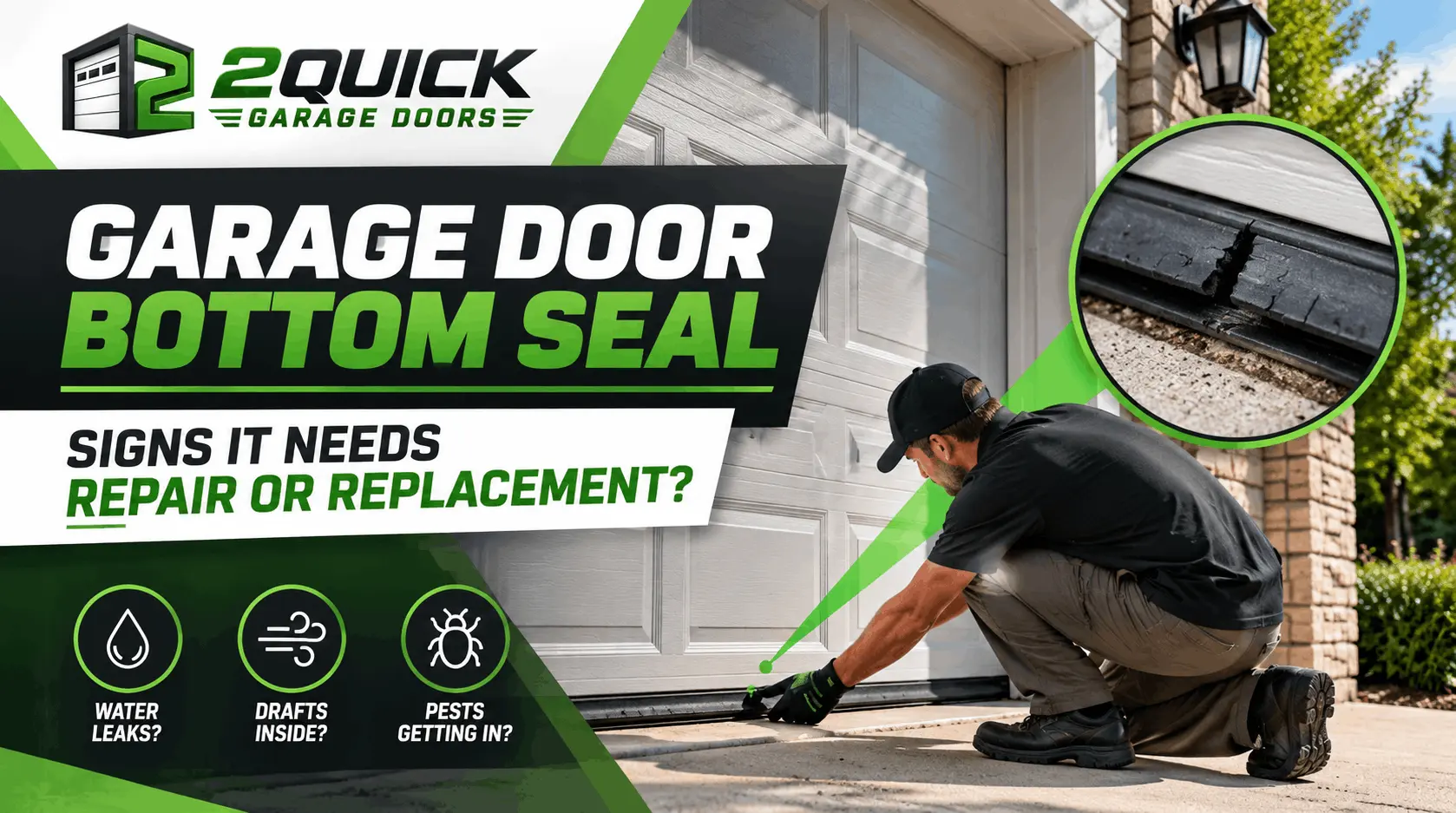
Garage Door Bottom Seal: Signs It Needs Repair or Replacement
A garage door bottom seal is a small component, but it plays an important role in protecting your garage from rain, dirt, drafts, leaves, insects, and outdoor air. When the seal becomes cracked, brittle, loose, or flattened, you may start noticing water under the garage door, visible gaps, or debris entering the garage.
Knowing the signs of a worn garage door bottom seal can help you determine whether the problem requires a simple seal replacement or a closer inspection of the garage door itself.
What Does a Garage Door Bottom Seal Do?
A garage door bottom seal is installed along the bottom edge of the garage door. When the door closes, the seal presses against the garage floor to create a flexible barrier between the door and the ground.
A properly installed garage door bottom weather seal can help reduce:
- Rainwater entering under the door
- Dirt and leaves
- Outdoor drafts
- Dust and debris
- Small insects and pests
- Light passing through gaps
The seal also helps the bottom edge of the garage door sit more consistently against the floor. However, it cannot correct major problems caused by an uneven garage floor, damaged tracks, or an improperly aligned door.
What Are the Signs Your Garage Door Bottom Seal Needs Attention?
A worn seal may deteriorate gradually rather than failing all at once. Paying attention to small changes can help you identify the problem before it becomes more noticeable.
1. You See Daylight Under the Garage Door
One of the easiest signs to spot is visible daylight underneath the closed garage door.
A small amount of unevenness can occur because garage floors are not always perfectly level. However, if a noticeable gap has developed or part of the seal no longer touches the floor, the seal may be worn, damaged, or incorrectly positioned.
2. Water Is Getting Under the Garage Door
If rainwater repeatedly enters your garage, inspect the bottom seal.
A damaged garage door weather seal may no longer provide consistent contact with the floor. Cracks, tears, flattened sections, or gaps can allow water to pass underneath the closed door.
However, the seal is not always the only possible cause. Poor drainage, an uneven garage floor, door alignment problems, or gaps around the sides of the garage door can also contribute to water intrusion.
3. The Seal Is Cracked, Brittle, or Torn
Garage door seals are exposed to temperature changes, moisture, sunlight, dirt, and repeated compression.
Over time, the material can become:
- Cracked
- Brittle
- Hard
- Torn
- Flattened
- Misshapen
When the seal loses its flexibility, it may no longer create a reliable barrier against outdoor conditions.
4. The Seal Is Pulling Away From the Door
The bottom seal should remain securely attached to the bottom edge of the garage door.
If sections are loose or pulling away, the seal may move out of position as the door opens and closes. Continuing to operate the door with a badly damaged seal can make the problem worse.
5. Dirt and Debris Keep Entering the Garage
Leaves, dust, dirt, and other outdoor debris entering underneath the closed garage door can indicate a deteriorated seal.
This can become particularly noticeable after windy weather. If the seal has lost its flexibility or no longer reaches the floor, outside debris can pass through the opening.
6. The Seal Looks Flattened
A bottom seal is designed to compress when the garage door closes. After years of repeated use, the material can lose its original shape.
A flattened seal may no longer provide enough contact with the floor, leaving small openings underneath the door.
Can a Garage Door Bottom Seal Help Prevent Water?
Yes. A properly installed garage door bottom seal can help reduce water entering underneath the door.
However, it is important to understand what the seal can and cannot do.
A new seal will not correct a major drainage problem, severely uneven garage floor, or garage door alignment issue. If water continues entering after garage door seal replacement, the surrounding area should be inspected to determine the actual source.
What Causes a Garage Door Bottom Seal to Wear Out?
Several factors can affect the condition and lifespan of a garage door seal.
Normal Wear and Compression
Every time the garage door closes, the seal compresses against the floor. Thousands of opening and closing cycles can eventually affect its flexibility and shape.
Weather Exposure
Heat, moisture, temperature changes, and sunlight can gradually deteriorate the sealing material.
Uneven Garage Floors
If the garage floor has significant high and low areas, different sections of the seal may experience different levels of compression. This can eventually lead to uneven wear.
Improper Installation
A seal that is installed incorrectly may fold, move, or fail to make consistent contact with the floor.
Garage Door Alignment Problems
If the garage door does not travel evenly, the bottom seal may not sit correctly against the floor. In that situation, replacing the seal alone may not solve the underlying problem.
If your door is showing alignment or movement issues, garage door repair services in The Woodlands, TX may be needed to identify the cause.
Garage Door Bottom Seal Repair vs. Replacement
Not every seal problem automatically requires complete replacement.
Garage door bottom seal repair may be possible when the seal has shifted, become partially detached, or has a minor positioning problem while the material itself remains in good condition.
However, if the seal is cracked, brittle, torn, or permanently flattened, garage door bottom seal replacement is generally the more appropriate solution.
Before replacing the seal, it is important to determine whether the problem is actually coming from the seal or from another part of the garage door system.
Garage Door Bottom Seal vs. Garage Door Weather Seal
These terms are sometimes used interchangeably, but they can describe different sealing components.
The garage door bottom seal is installed along the bottom edge of the door and contacts the garage floor when the door closes.
A garage door weather seal can refer more broadly to sealing materials used around the garage door opening, including weatherstripping around the sides and top.
If you are experiencing drafts, water, or visible gaps, inspecting the entire garage door perimeter can help identify where the problem is coming from.
What Should You Check Before Garage Door Seal Replacement?
Before scheduling garage door seal replacement, look at the condition of the entire lower portion of the garage door.
Check whether:
- The door closes evenly
- The bottom edge is straight
- The seal is cracked or torn
- The seal is still securely attached
- Daylight is visible underneath
- Water is entering from underneath
- The garage floor has significant uneven areas
- The door appears misaligned
- The tracks and rollers appear to be functioning normally
If several problems are present, replacing the seal alone may not provide a long-term solution.
Can You Replace a Garage Door Bottom Seal Yourself?
Some garage door bottom seals can be replaced by a property owner, depending on the garage door design, retainer, and type of seal.
However, caution is important when working around garage door components. Springs, cables, tracks, and other hardware can create serious safety risks if handled incorrectly.
If the bottom seal problem occurs alongside an uneven door, damaged hardware, track problems, or difficulty opening and closing the door, professional inspection is a safer option.
A technician can determine whether you need a simple seal replacement or a broader garage door repair.
Why Garage Door Maintenance Matters
A worn bottom seal is easier to identify when the garage door is regularly inspected.
Routine garage door maintenance can help identify problems with the seal, tracks, rollers, hinges, springs, cables, and opener before they become more disruptive.
Because these components work together, a problem with one part can sometimes affect another. For example, an alignment issue may cause uneven pressure on the bottom seal.
Regular maintenance can therefore help extend component life and reduce the chance of unexpected garage door problems.
For ongoing care, you can explore garage door maintenance services in The Woodlands, TX.
Garage Door Bottom Seal Problems in The Woodlands, TX
Weather exposure can make garage door seals an important part of maintaining a residential or commercial garage door in The Woodlands, TX.
If you notice water under the garage door, visible daylight, drafts, damaged rubber, or debris entering underneath the door, inspect the bottom seal first.
If the seal is cracked or flattened, replacement may solve the problem. But if the door is uneven, difficult to close, rubbing against the tracks, or leaving a larger gap on one side, the issue may involve another garage door component.
For property owners searching for garage door seal replacement near me in The Woodlands, TX, it is worth identifying the underlying cause before replacing the seal.
2Quick Garage Doors provides residential and commercial garage door services throughout The Woodlands, TX and surrounding areas. A professional inspection can help determine whether you need a bottom seal replacement or another type of garage door repair.
When Should You Call a Garage Door Professional?
A professional inspection is recommended when a damaged bottom seal is accompanied by other garage door problems.
Consider professional service if:
- The garage door sits unevenly
- A large gap remains underneath the door
- The door is difficult to open or close
- The door rubs against the tracks
- Rollers or hinges appear damaged
- The garage door is off track
- Springs or cables appear damaged
- Water continues entering after replacing the seal
- The door does not close evenly
Do not attempt to adjust or repair garage door springs yourself. These components can store significant energy and require proper tools and experience.
Final Thoughts
A garage door bottom seal may be small, but it plays an important role in protecting your garage from water, drafts, dirt, debris, and outdoor conditions.
Cracks, tears, flattening, visible gaps, and water entering underneath the door are common signs that the seal needs attention. However, the seal is not always the underlying cause of a garage door gap.
Before replacing it, check how the garage door moves and whether the floor, tracks, rollers, and other components are functioning properly. If the problem extends beyond the seal, a professional inspection can help identify the right solution and prevent unnecessary repairs.
Garage Door Bottom Seal FAQs
1. How often should a garage door bottom seal be replaced?
There is no fixed replacement schedule because the lifespan depends on usage, weather exposure, material, installation, and garage floor conditions. Inspect the seal regularly and replace it when it becomes cracked, brittle, torn, or unable to close gaps effectively.
2. Why is water coming under my garage door?
Water can enter because of a damaged bottom seal, poor drainage, an uneven garage floor, damaged weatherstripping, or gaps around the garage door. Identifying the source of the water is important before replacing any component.
3. How do I know if my garage door bottom seal is bad?
Common signs include visible daylight underneath the closed door, cracking, tearing, flattening, loose sections, drafts, water entering the garage, and dirt or debris getting underneath the door.
4. Can I replace a garage door bottom seal myself?
Some bottom seals can be replaced depending on the garage door design and retainer system. However, if the door also has track, spring, cable, alignment, or other mechanical problems, professional service is recommended.
5. Does a garage door bottom seal stop rain from entering?
A properly installed bottom seal can significantly reduce water entering underneath the door. However, it cannot correct major drainage issues or compensate for a severely uneven garage floor.