
Garage Door Not Closing All the Way? Common Causes and What to Check
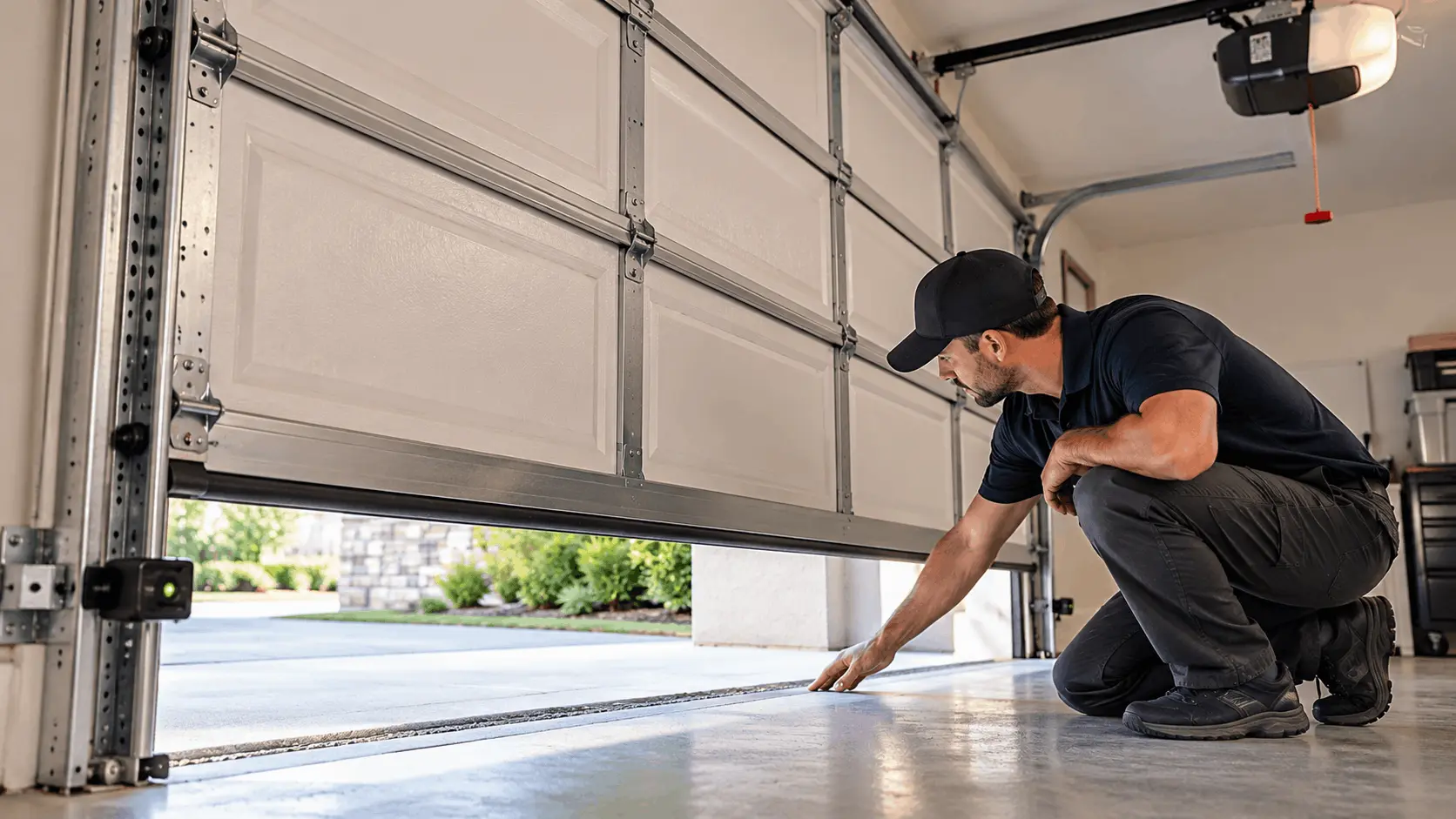
A garage door that stops before reaching the ground can be frustrating, especially when the opener sounds like it is working normally. You may press the remote again and again, only to watch the door stop several inches above the floor, reverse direction, or close unevenly.
When a garage door is not closing all the way, the cause is not always the garage door opener itself. Something as simple as an obstruction near the safety sensors can prevent the door from completing its cycle, while incorrect travel settings, damaged tracks, worn rollers, or a door that is out of balance can create more complicated problems.
The good news is that you can safely check a few basic things before calling for professional help. However, mechanical components such as springs and cables should not be adjusted without the proper tools and training.
This guide explains why a garage door may stop before fully closing, what you can safely check, and when professional garage door service is the better option.
Why Is My Garage Door Not Closing All the Way?
A garage door may fail to reach the floor for several reasons. The most common causes include:
- Something blocking the door’s path.
- Dirty or misaligned safety sensors.
- Incorrect opener travel limits.
- A problem with the opener’s closing-force settings.
- Damaged or obstructed tracks.
- Worn rollers or hinges.
- An unbalanced garage door.
- A broken or weakened spring.
- An opener that needs repair or adjustment.
The symptom itself can provide an important clue.
For example, if the door gets almost to the floor and then immediately opens again, the safety sensors or opener settings may need attention. If one side reaches the floor before the other, the problem may involve the door’s mechanical components or alignment.
If the door stops at exactly the same position every time, travel-limit settings can also be worth investigating.
First, Notice Exactly Where the Door Stops
Before adjusting anything, watch one complete closing cycle from a safe position.
Does the door:
Stop several inches above the floor?
This can point toward travel-limit settings, an obstruction, or an opener-related issue.
Reach the floor and immediately reverse?
Safety sensors, an obstruction, or the opener’s closing settings may be involved.
Close unevenly?
This can indicate a track, roller, cable, spring, or balance problem.
Make unusual sounds while stopping?
Grinding, scraping, popping, or straining sounds may indicate a mechanical problem.
Stop at a different position each time?
Inconsistent stopping can indicate an opener, sensor, or mechanical issue that needs further inspection.
Understanding the symptom helps prevent unnecessary adjustments.
1. Check for an Obstruction Near the Garage Door
One of the simplest explanations for a door that will not fully close is something in its path.
A small object, storage item, piece of debris, or even a vehicle positioned too close to the door can interfere with its movement.
Look along the floor where the bottom section meets the concrete. Also check the tracks and the area around the door without touching moving components.
If you find an obvious object blocking the doorway, remove it only if you can do so safely while the door is stationary.
Do not place your hands underneath a moving garage door or attempt to hold the door open while removing an obstruction.
If the doorway is clear but the problem continues, another component may be responsible.
2. Inspect the Garage Door Safety Sensors
Safety sensors are located near the bottom of the garage door tracks. They communicate across the doorway and help detect an obstruction while the door is closing.
If the sensors are dirty, blocked, or out of alignment, the opener may prevent the door from closing completely.
What can you safely check?
Look at both sensor lenses and make sure nothing is blocking them. Dust, dirt, storage items, or accidental movement can interfere with their operation.
Also check whether the sensors appear to face each other correctly.
You should not bypass the sensors or permanently reposition them without understanding the manufacturer’s instructions. They are an important part of the opener’s safety system.
If cleaning and checking for obvious obstruction does not solve the problem, the issue may involve alignment, wiring, or another opener component.
3. The Opener’s Travel Limits May Need Attention
Garage door openers use travel settings to determine how far the door should move in each direction.
If the closing travel limit is incorrect, the opener may stop before the door reaches the floor.
This can happen after certain repairs, adjustments, component changes, or problems with the opener itself.
The exact adjustment procedure varies by opener manufacturer and model. Some systems use buttons or digital controls, while others use mechanical adjustment points.
Because an incorrect adjustment can affect the door’s operation and safety, do not randomly change settings simply to force the door lower.
If the door consistently stops at the same point and there is no obvious obstruction, a professional can determine whether the travel setting is actually the cause.
4. Close-Force Settings Could Be Involved
Some garage door openers use force settings to control how much force the motor applies while opening or closing.
If the opener detects resistance while closing, it may stop or reverse rather than continuing toward the floor.
This is an important safety function, so increasing the force simply to make the door close can be the wrong approach.
Excessive resistance may indicate a mechanical problem with the door rather than a setting that needs to be increased.
If your garage door suddenly starts stopping before closing after previously operating normally, have the system inspected rather than immediately increasing the closing force.
5. Damaged or Obstructed Garage Door Tracks
The tracks guide the rollers as the garage door moves. If a track is bent, dirty, obstructed, or damaged, the door may have difficulty completing its closing cycle.
You may notice:
- Scraping or grinding sounds.
- The door moving unevenly.
- A roller struggling to move.
- A visible bend in the track.
- One side of the door sitting differently from the other.
Do not attempt to straighten a heavily bent track while the door is under tension.
A track problem can affect more than the door’s closing position. Continued operation may put additional stress on rollers, hinges, cables, springs, and the opener.
If the track appears damaged, stop using the door and arrange a professional inspection.
6. Worn Rollers or Hinges Can Prevent Full Closure
Garage door rollers and hinges allow the individual sections of the door to move smoothly through the tracks.
Over time, worn rollers can become noisy or develop excessive resistance. Damaged hinges can also affect how the door sections move.
The problem may become more noticeable near the bottom of the closing cycle.
If the door is increasingly noisy, jerky, or difficult to move, don’t assume that the opener is the only problem.
A properly functioning opener still depends on a garage door that can move smoothly through its complete travel path.
7. An Unbalanced Garage Door Can Affect Closing
A garage door should be properly balanced so the opener does not have to overcome excessive weight or resistance.
When the spring system is worn, damaged, or no longer providing the correct counterbalance, the door may become difficult for the opener to operate.
You might notice that the door feels unusually heavy, moves unevenly, or behaves differently than it did previously.
Don’t adjust the springs yourself
Garage door springs can store significant mechanical energy. Torsion and extension spring systems require appropriate tools and procedures for adjustment or replacement.
If you suspect a spring problem, leave the spring and related cables alone and contact a professional.
If the door’s mechanical system needs attention, 2Quick Garage Doors provides garage door spring repair and replacement in The Woodlands, TX.
8. The Garage Door Opener May Need Repair
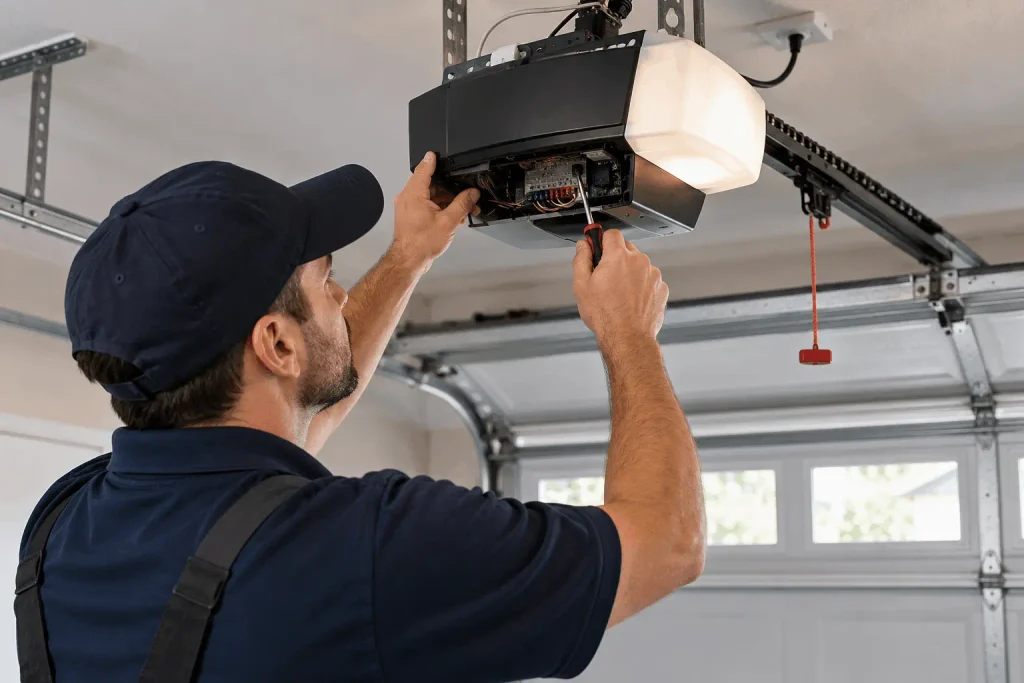
If the door itself moves freely but the opener repeatedly stops before completing the closing cycle, the opener may need inspection.
Possible causes can include:
- Sensor problems.
- Electrical issues.
- Worn internal components.
- Travel-limit problems.
- Control board issues.
- Motor-related problems.
A smart opener can introduce additional variables, including connectivity and app-related controls, but a Wi-Fi connection is not necessarily responsible for a physical closing problem.
If your opener is making unusual noises, struggling to move the door, or stopping during operation, professional diagnosis can help determine whether repair or replacement makes more sense.
2Quick Garage Doors provides garage door opener repair and installation for opener-related problems.
9. What You Can Safely Check Yourself
Before scheduling a repair, there are a few basic observations you can make without working on the door’s high-tension components.
Check that:
- Nothing is blocking the doorway.
- The safety sensor lenses are clean.
- Nothing is blocking the sensor path.
- The opener has electrical power.
- The remote control has a working battery.
- The door tracks are not visibly obstructed.
- The door is not visibly crooked or hanging unevenly.
These checks can help identify simple problems.
However, avoid adjusting springs, cables, tracks, or force settings simply because the door is not closing. If you are unsure about the cause, professional inspection is safer than trial-and-error adjustments.
When Should You Stop Using the Garage Door?
A garage door that does not close completely is not automatically unsafe, but certain signs mean you should stop operating it.
Stop using the door if you notice:
The door is crooked.
One side may be higher or lower than the other.
A cable is loose or hanging.
Do not pull or reconnect it.
A spring is broken.
Do not attempt to lift the door manually.
The door has come off its tracks.
Keep people and vehicles away from the opening.
The door is making loud grinding or popping sounds.
Repeated operation may worsen the underlying problem.
The door is moving unpredictably.
An unstable door should be inspected before further use.
If your garage door has one of these symptoms, professional garage door repair in The Woodlands, TX can help identify the cause.
Residential and Commercial Garage Door Closing Problems
The same basic mechanical principles apply to both residential and commercial garage doors, but the impact of a closing problem can be different.
For a residential garage, a door that will not close completely can affect security, vehicle access, and everyday convenience.
For a commercial property, the problem may interfere with deliveries, vehicle movement, employee access, or the ability to secure a service or storage area.
Commercial garage doors can also experience heavier usage, so the appropriate opener, hardware, and maintenance requirements may differ from those of a standard residential system.
If the property is in The Woodlands or a surrounding service area, the type of door and its operating environment should be considered before selecting a repair or replacement solution.
Should You Repair or Replace the Garage Door Opener?
A door that is not closing completely does not automatically mean the opener needs to be replaced.
If the opener is otherwise reliable and the problem is caused by a sensor, adjustment, or another repairable issue, replacement may not be necessary.
On the other hand, an older opener with repeated failures, damaged internal components, or compatibility limitations may make replacement worth considering.
The same principle applies to the garage door itself. A closing problem may originate from the door hardware rather than the opener.
A proper diagnosis should come before deciding between repair and replacement.
How to Prevent Garage Door Closing Problems
Regular maintenance can help identify developing problems before they become larger failures.
Pay attention to changes in how the door sounds and moves. A new grinding noise, uneven movement, delayed response, or repeated stopping is worth investigating.
Keep the garage door’s operating area clear and periodically inspect visible hardware for obvious damage.
Professional maintenance can also identify issues that are difficult to recognize during normal use.
For homeowners and property managers looking for ongoing care, 2Quick Garage Doors offers garage door maintenance services.
Regular maintenance does not guarantee that a garage door will never fail, but it can help identify worn or damaged components before they create a larger operating problem.
When to Call a Garage Door Professional
If you have checked for an obvious obstruction and the garage door is still not closing completely, the next step depends on what the door is doing.
If it consistently stops at the same point, the opener’s travel settings or another component may need inspection.
If it reverses, the safety sensors or closing system may need attention.
If it moves unevenly or makes unusual mechanical sounds, the problem may involve tracks, rollers, springs, cables, or other hardware.
And if the door is unstable, off track, or has a broken spring or cable, avoid operating it and arrange professional service.
Trying to fix a mechanical problem by repeatedly operating the opener can turn a relatively contained issue into a more expensive repair.
Garage Door Not Closing All the Way in The Woodlands, TX
A garage door that stops before reaching the floor can have several causes, from a blocked sensor to a problem with the opener or door hardware.
The safest approach is to start with simple visual checks and avoid adjusting high-tension components without the appropriate experience and equipment.
2Quick Garage Doors serves residential and commercial properties in The Woodlands, TX and surrounding areas with garage door repair, opener services, spring repairs, installation, and maintenance.
If your garage door continues to stop before fully closing after basic checks, a professional inspection can identify whether the issue is related to the sensors, opener, tracks, rollers, springs, or another component.
Final Thoughts
When a garage door is not closing all the way, the solution depends on what happens during the closing cycle.
Start with the safest and simplest checks: look for an obstruction, inspect the visible safety sensors, and confirm that the opener has power. If the problem continues, avoid randomly adjusting force or travel settings.
A garage door that closes unevenly, stops unexpectedly, makes unusual noises, or shows signs of spring, cable, track, or roller damage needs more than basic troubleshooting.
For residential and commercial properties in The Woodlands, TX, 2Quick Garage Doors can inspect the system and determine whether the issue involves the door, opener, or another component.
If the problem persists, you can schedule garage door repair in The Woodlands, TX and have the system properly assessed.
Frequently Asked Questions
Why is my garage door not closing all the way?
Common causes include obstructed or misaligned safety sensors, incorrect opener travel limits, excessive resistance, damaged tracks, worn rollers, an unbalanced door, or an opener problem. The exact cause depends on how and where the door stops.
Why does my garage door stop before reaching the floor?
If the door consistently stops at the same position, the opener’s travel settings may be involved. However, an obstruction, mechanical resistance, or another component can produce a similar symptom.
Why does my garage door close halfway and stop?
A door that closes halfway and stops may be encountering resistance or a problem with its safety system, travel settings, tracks, rollers, or opener. Avoid increasing the opener’s force without identifying the cause.
Why does my garage door close almost completely but leave a gap?
A small gap at the bottom can result from incorrect travel limits, an obstruction, an uneven door, damaged hardware, or an opener adjustment. The correct solution depends on the underlying cause.