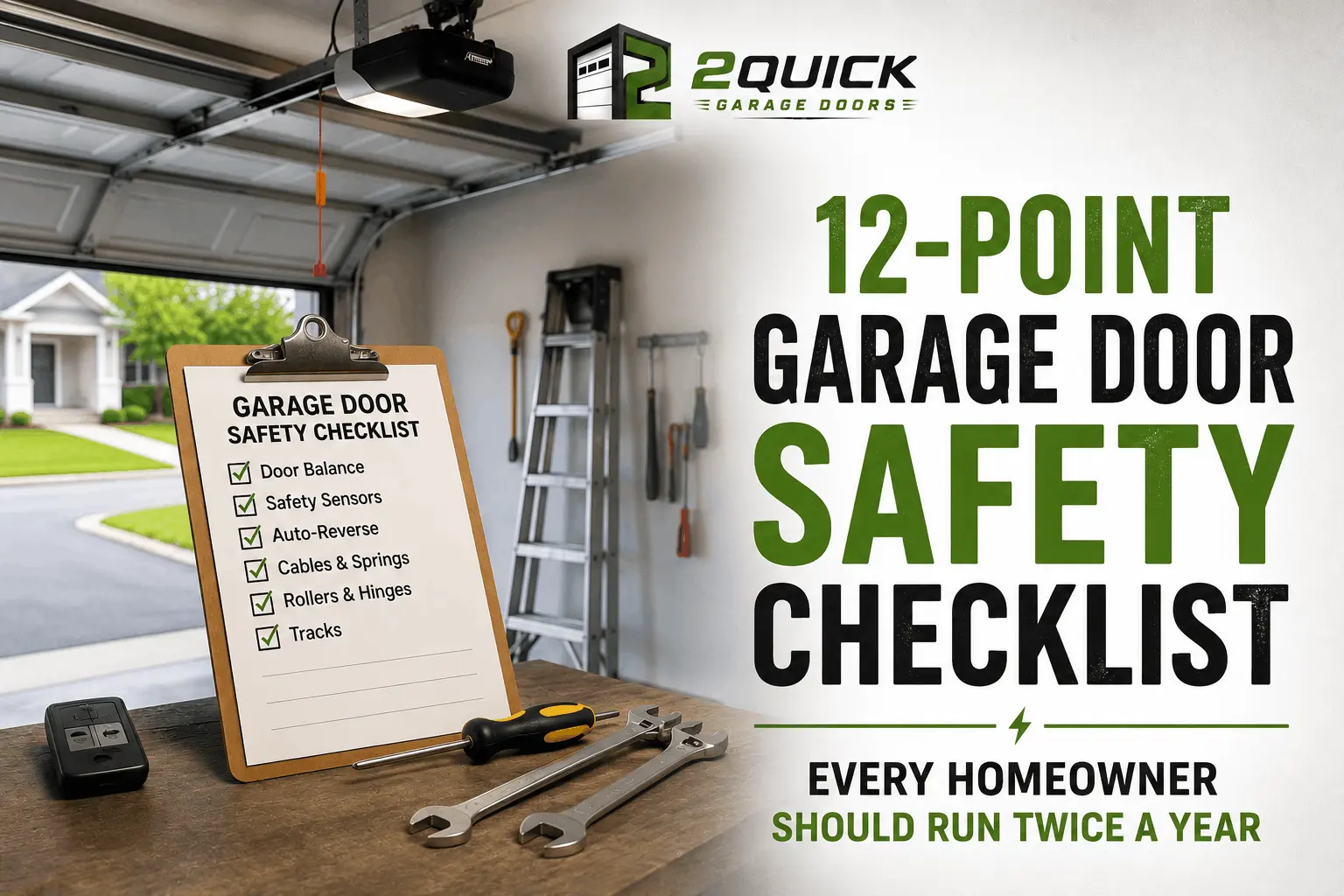
A garage door is more than an entry point to your home. It is a large, heavy mechanical system made up of springs, cables, rollers, tracks, safety sensors, and an automatic opener. When these components work properly, the door should open and close smoothly and respond safely to obstacles. When one of them fails, however, the risk can go beyond an inconvenient breakdown.
That is why a garage door safety checklist should be part of your regular home maintenance routine. For homeowners in The Woodlands, TX, performing a safety inspection twice a year can help identify worn components, damaged hardware, and malfunctioning safety features before they become more serious problems.
The following 12-point checklist focuses specifically on the parts and functions that can affect the safe operation of your garage door.
Why Garage Door Safety Checks Matter
Regular garage door maintenance helps protect the system from premature wear, but a safety inspection has a different purpose. It focuses on components that can create a risk of injury if they malfunction, including the garage door opener, safety sensors, springs, cables, tracks, and automatic reversing system.
A garage door can weigh hundreds of pounds, and many of its components operate under significant mechanical tension. A damaged spring, broken cable, misaligned photo-eye sensor, or failed auto-reverse function can create a hazardous situation without giving homeowners much warning.
A twice-yearly residential garage door safety inspection gives you an opportunity to look for visible problems and confirm that the door’s primary safety features are functioning as intended.
12-Point Garage Door Safety Checklist
1. Test the Garage Door Auto-Reverse Function
The automatic reversing system is one of the most important safety features on a garage door opener. It is designed to stop and reverse the door when the system detects an obstruction.
Follow the testing procedure provided by your opener manufacturer rather than attempting an improvised test. If the door does not stop or reverse as expected, discontinue normal operation and have the opener inspected by a qualified garage door technician.
A malfunctioning auto-reverse system should never be ignored because it can increase the risk of the door closing against a person, pet, vehicle, or other object.
2. Check the Photo-Eye Safety Sensors
Most automatic garage door openers have two photo-eye sensors positioned near the bottom of the door opening. These sensors communicate with each other to detect an object in the door’s path.
During a visual inspection:
- Make sure both sensors are securely mounted.
- Check that nothing is blocking their line of sight.
- Look for dirt, dust, or debris on the sensor lenses.
- Make sure the sensors appear properly aligned.
- Watch for unusual blinking or warning lights.
If the door refuses to close or the sensors appear damaged or misaligned, the system should be inspected before continued use.
3. Make Sure the Emergency Release Is Accessible
The emergency release mechanism allows the garage door to be disconnected from the automatic opener so the door can be operated manually when necessary.
Make sure the release mechanism is visible and accessible and that household members know its purpose. It can be especially important during a power outage or opener malfunction.
Never use the emergency release while the garage door is moving. If the door is unusually heavy, difficult to move, or does not remain in position when operated manually, stop and contact a professional rather than attempting to repair the problem yourself.
4. Inspect Panel Seams and Potential Pinch Points
Sectional garage doors contain multiple panels connected by hinges. As the door moves, these sections create moving joints that can become pinch points.
With the door stationary, visually inspect the seams between the panels for:
- Damaged or exposed edges
- Broken hinges
- Unusual gaps
- Sharp or protruding hardware
- Signs of panel separation
Keep children and pets away from moving garage door sections. Never place hands or fingers between panels while the door is operating.
5. Look for Visible Spring and Cable Damage
Garage door springs and cables are critical load-bearing components. They also operate under significant tension, making them among the components that require the greatest caution.
From a safe distance, look for obvious signs of:
- Rust or corrosion
- Frayed cables
- Broken or separated cable strands
- Unusual gaps or damage around springs
- Sagging or visibly displaced components
Do not touch, adjust, remove, or attempt to repair garage door springs or cables yourself. If you see damage or anything that looks unusual, have a qualified garage door technician inspect the system.
6. Check the Tracks and Rollers
The tracks guide the garage door as it opens and closes, while rollers allow the door sections to move along those tracks.
Look for visible signs of:
- Bent or damaged tracks
- Loose track hardware
- Gaps or unusual movement
- Damaged rollers
- Rollers that appear to be out of position
- Excessive wear or corrosion
Do not attempt to force a door back onto its tracks. A misaligned or damaged garage door can place additional stress on the opener, springs, cables, and other components. If something looks out of place, have a professional assess the system.
7. Inspect the Bottom Seal and Weatherstripping
The bottom seal and weatherstripping help close the gap between the garage door and the surrounding structure. Although primarily associated with weather protection, damaged seals can also contribute to problems around the garage entrance.
Check for:
- Cracking or splitting
- Missing sections
- Excessive wear
- Gaps beneath the closed door
- Water or debris entering around the threshold
A damaged seal can allow moisture, insects, and debris into the garage and may also contribute to slippery conditions near the doorway.
8. Review Remote and Keypad Access
Garage door safety also includes controlling who can operate the door.
Check that your remote controls and wireless keypad are working properly and that you are using the security features supported by your opener. Keep remotes away from young children and avoid sharing keypad codes unnecessarily.
If your garage door opener or keypad is outdated, consult the manufacturer’s documentation or a garage door professional about available security and access-control upgrades.
9. Pay Attention to Opener Performance
Your garage door opener should operate the door smoothly and consistently. Changes in performance can sometimes indicate a developing mechanical or electrical problem.
Pay attention to:
- Unusual grinding or clicking
- Excessive vibration
- Delayed operation
- The opener stopping unexpectedly
- The door reversing without an obvious obstruction
- Unusual movement during opening or closing
Do not adjust opener force or other safety settings simply to make the door operate through a problem. If the opener is behaving differently from normal, have the system properly diagnosed.
10. Inspect the Door Panels for Structural Damage
Garage door panels can become damaged by vehicles, severe weather, impact, moisture, or age.
Look for:
- Large dents
- Cracks
- Warping
- Separating sections
- Loose hardware
- Signs of corrosion
- Damage around hinges or mounting points
Minor cosmetic damage may not affect operation, but significant panel damage can change the weight, balance, or movement of the door. Structural damage should be evaluated by a garage door professional before the door continues to operate normally.
11. Keep Children and Pets Away From Moving Parts
Garage doors should always be treated as moving mechanical equipment when children or pets are nearby.
Keep the following safety habits in place:
- Do not allow children to play underneath or around the moving door.
- Keep garage door remotes away from young children.
- Do not allow anyone to walk beneath a moving door.
- Keep toys, bicycles, tools, and other objects away from the door’s operating path.
- Teach children never to touch springs, cables, rollers, or other moving hardware.
Good household habits are an important part of preventing garage door accidents.
12. Schedule a Professional Garage Door Safety Inspection
A homeowner can identify many visible warning signs, but some safety-critical components require professional assessment.
A qualified garage door technician can evaluate areas that are difficult or unsafe for homeowners to inspect themselves, including:
- Spring and cable condition
- Door balance
- Opener operation
- Safety sensor performance
- Auto-reverse function
- Track and roller condition
- Hardware and mounting points
- Overall door movement
If you notice a problem during your checklist, don’t wait for the door to fail completely. A professional inspection can determine whether the issue requires adjustment, repair, replacement, or further monitoring.
Why Should You Check Your Garage Door Twice a Year?
A garage door does not necessarily fail immediately when a component begins to wear. Springs can weaken gradually, rollers can deteriorate, tracks can become loose, and safety sensors can become misaligned over time.
Checking the system twice a year creates a regular opportunity to identify these changes.
For homeowners in The Woodlands, seasonal inspections can be particularly useful. Checking the garage door before periods of severe weather and again before winter allows you to address potential problems before the door faces another season of changing conditions.
You should also perform an additional check whenever you notice a change in the way the door operates.
Signs Your Garage Door Needs Professional Attention
A safety inspection should not end with simply making a note of a problem. Certain warning signs indicate that the garage door should be professionally evaluated.
Contact a garage door technician if you notice:
- The door suddenly becomes difficult to open or close.
- The door is crooked or uneven while moving.
- Springs appear broken or damaged.
- Cables are frayed, loose, or disconnected.
- Rollers come out of the tracks.
- Tracks appear bent or severely damaged.
- The opener makes unusual noises.
- The door reverses unexpectedly.
- Safety sensors do not appear to function correctly.
- The door does not respond properly to its safety features.
- A damaged panel affects the door’s movement or balance.
Do not continue operating a garage door that appears unsafe simply because it still opens and closes.
What Homeowners Should Not Repair Themselves
Not every item on a garage door safety checklist is a DIY repair.
Visual inspections are generally appropriate for homeowners, but repairs involving torsion springs, extension springs, cables, door balance, track alignment, opener force settings, or structural components can involve significant mechanical forces.
Attempting to repair these components without the appropriate training and equipment can result in serious injury or additional damage to the garage door system.
When a safety inspection identifies a mechanical problem, the safer approach is to have the system evaluated by a qualified garage door professional.
Make Garage Door Safety Part of Your Home Maintenance Routine
A garage door safety checklist should not be something you use only after a problem occurs. A short inspection twice a year can help you recognize changes in the door’s operation and identify visible warning signs before they become larger problems.
For homeowners in The Woodlands, TX, keeping an eye on the garage door opener, safety sensors, springs, cables, rollers, tracks, panels, and emergency release system provides a practical way to stay ahead of potential safety issues.
If a component looks damaged, the door starts behaving differently, or you are unsure whether a safety feature is working correctly, have the system evaluated by a professional garage door technician rather than taking a risk with a repair you are not equipped to perform.
Frequently Asked Questions
How often should I perform a garage door safety inspection?
For most homeowners, checking the garage door twice a year is a practical routine. You should also inspect the door whenever you notice unusual noise, movement, balance, or opener behavior.
What are the most dangerous garage door components?
Garage door springs and cables require particular caution because they can operate under significant tension. Homeowners can look for visible signs of damage, but repairs, adjustments, and replacements should be handled by a qualified professional.
Is a garage door safety checklist the same as a maintenance checklist?
No. A maintenance checklist generally focuses on keeping the garage door operating smoothly and reducing wear. A safety checklist focuses specifically on components and functions that can create a risk of injury if they fail, including safety sensors, auto-reverse protection, springs, cables, tracks, and the garage door opener.
Can I inspect my garage door myself?
You can perform a basic visual safety check and observe how the door operates, but certain components should not be adjusted or repaired by homeowners. Springs, cables, door balance, track alignment, and opener safety settings are better handled by a qualified garage door professional.