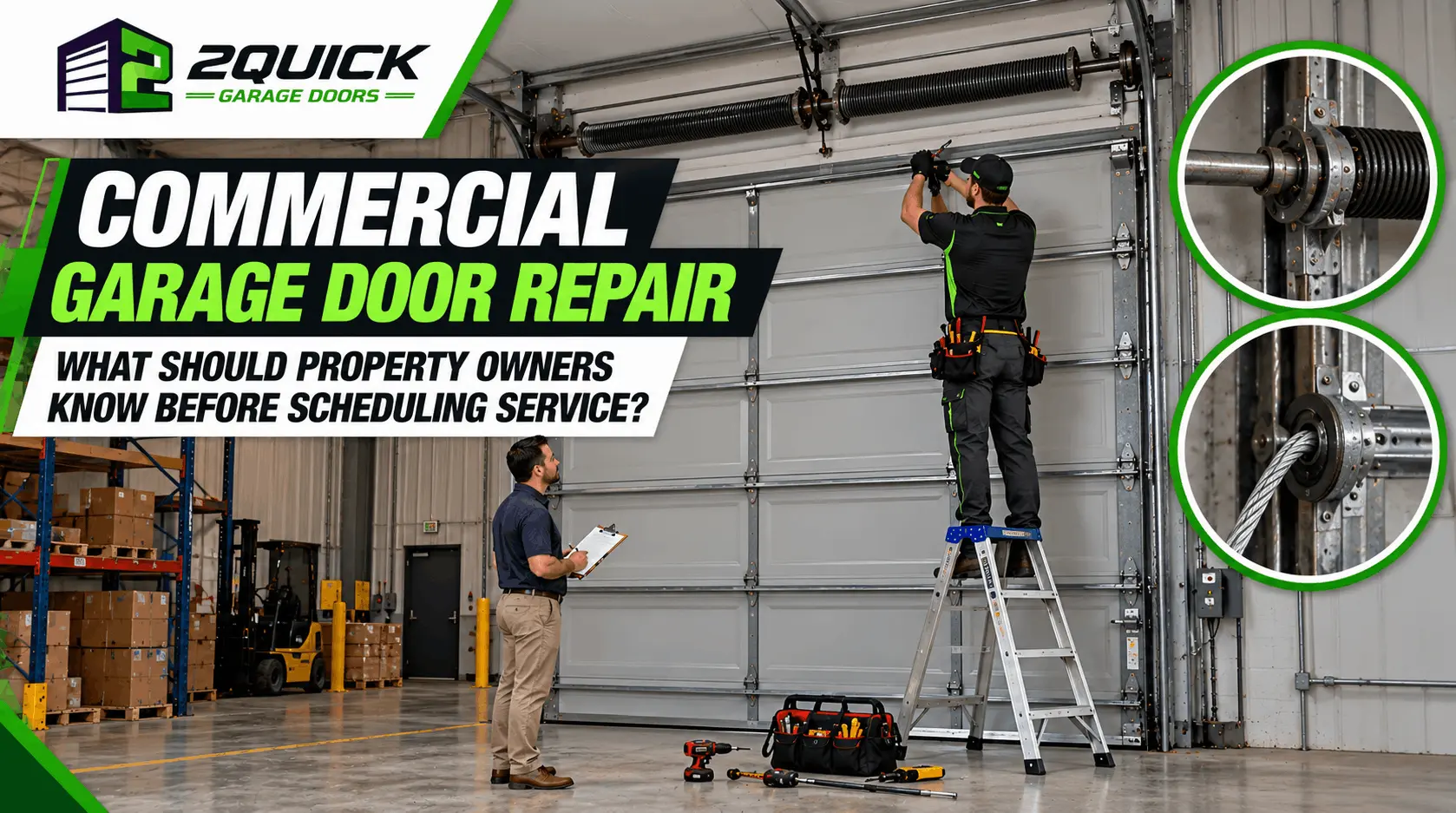
Commercial Garage Door Repair: What Should Property Owners Know Before Scheduling Service?
A commercial garage door does much more than provide access to a building. For warehouses, service facilities, storage properties, industrial spaces, and other commercial locations, the door can be an important part of daily operations.
When a commercial garage door stops working correctly, the problem can affect employees, deliveries, equipment movement, security, and normal access to the property. That is why scheduling commercial garage door repair should involve more than simply calling the first company you find.
Before arranging service, property owners should understand the symptoms they are seeing, the components that may be involved, and what information a technician may need. Having a better understanding of the problem can also help you ask more useful questions and make informed decisions about repair or replacement.
This guide explains what property owners should know before scheduling commercial garage door service and how to prepare for a professional inspection.
Why Is Commercial Garage Door Repair Different From Residential Repair?
Commercial garage doors can operate under different conditions than residential garage doors. A commercial door may be larger, heavier, used more frequently, or connected to a facility where reliable access is important throughout the day.
A warehouse, for example, may open and close its overhead door dozens of times during normal operations. A service facility may depend on the door for vehicle access, while a loading area may need the door to operate reliably around deliveries and equipment.
Because of this, a commercial garage door problem should be evaluated based on how the door is used, not just what component appears to be damaged.
A technician may need to consider the door’s size, operating cycle, hardware, opener capacity, safety equipment, and overall condition before recommending a repair.
What Are the Most Common Commercial Garage Door Problems?
Commercial doors can experience many of the same mechanical problems found in residential systems, but frequent operation can accelerate wear on certain components.
Problems involving springs, cables, rollers, tracks, hinges, panels, openers, and safety sensors can all affect performance. In some cases, the problem develops gradually through normal wear. In others, an impact or sudden component failure causes the door to stop working.
One of the most important things property owners can do is pay attention to changes before the door completely fails. A door that becomes increasingly noisy, slower, uneven, or difficult to operate may be showing signs that a component needs attention.
Ignoring those changes can allow a relatively manageable issue to develop into a larger repair.
Commercial Garage Door Springs
Springs play an important role in counterbalancing the weight of a garage door. When a spring becomes worn or breaks, the door may become unusually heavy or difficult for the opener to lift.
A commercial door with a spring problem may also operate unevenly or stop functioning altogether.
Spring problems should not be treated as routine DIY repairs. Commercial doors can be particularly heavy, and spring systems can store significant energy.
If you suspect a broken spring, the safest approach is to stop operating the door and arrange a professional inspection.
Commercial Garage Door Cables
Cables work with the spring system to help lift and balance the door.
A loose, frayed, or broken cable can cause one side of the door to move differently from the other. In more serious cases, the door may become crooked or come off its normal path.
If a cable is visibly damaged, avoid pulling, reconnecting, or adjusting it yourself. The cable may be under tension, and the underlying cause may involve the springs, drums, rollers, or another component.
A commercial garage door technician can inspect the complete lifting system before determining the appropriate repair.
Commercial Garage Door Tracks and Rollers
Tracks and rollers guide the door during opening and closing. Frequent operation, accidental impact, loose hardware, or normal wear can affect their condition.
A damaged track may cause the door to scrape, shake, slow down, or move unevenly. Worn rollers can create excessive noise and resistance.
If the door is visibly off track or a track is bent, do not continue operating it simply because the opener still responds.
For commercial properties, continuing to operate a damaged door can place additional stress on other components and potentially interrupt normal operations even further.
What Information Should You Gather Before Scheduling Service?
Before contacting a commercial garage door repair service, try to identify exactly what the door is doing.
You do not need to diagnose the mechanical problem yourself. Instead, focus on the symptoms.
For example, consider whether the door:
- Will not open or close
- Stops halfway
- Moves unevenly
- Makes unusual sounds
- Comes off the track
- Has a broken spring or cable
- Opens but will not close
- Closes and immediately reverses
- Has visible impact damage
- Has an opener that does not respond
Knowing when the problem started can also be helpful. A sudden failure after an impact is different from a door that has become progressively louder over several months.
If possible, take a photo or short video of the problem from a safe location. This can give the technician useful information before arriving at the property.
Should You Keep Using a Commercial Garage Door That Has a Problem?
This depends on the type and severity of the problem.
A minor cosmetic issue may not prevent normal operation, while a broken cable, damaged spring, severely bent track, or off-track door can create a significant safety concern.
If the door is moving unevenly, hanging at an angle, making severe mechanical noises, or showing signs of structural damage, it is better to stop using it until it has been inspected.
Continuing to operate a damaged commercial door can sometimes cause additional wear to the opener, rollers, tracks, cables, and door sections.
For a commercial property, the short-term convenience of continuing to use a damaged door may therefore result in a larger repair later.
What Should a Commercial Garage Door Technician Inspect?
A proper commercial garage door inspection should look at the entire operating system rather than focusing only on the component that appears broken.
The technician may inspect the springs, cables, rollers, tracks, hinges, brackets, panels, opener, safety sensors, and mounting hardware. The door’s balance and overall movement can also provide important clues.
The operating environment matters as well. A commercial door that cycles frequently may require different considerations than a door that is used only occasionally.
This complete inspection helps determine whether the visible problem is the actual cause or simply the symptom of another issue.
What Should Property Owners Ask Before Approving a Repair?
Property owners should understand what needs to be repaired and why.
Instead of asking only for a price, ask the technician to explain which component failed, whether other parts show signs of wear, and whether the proposed repair addresses the underlying problem.
It is also useful to understand whether the repair is expected to restore normal operation or whether the door has reached a condition where replacement should be considered.
A good repair recommendation should be based on the door’s actual condition, operating requirements, and safety—not simply on replacing the most visible damaged part.
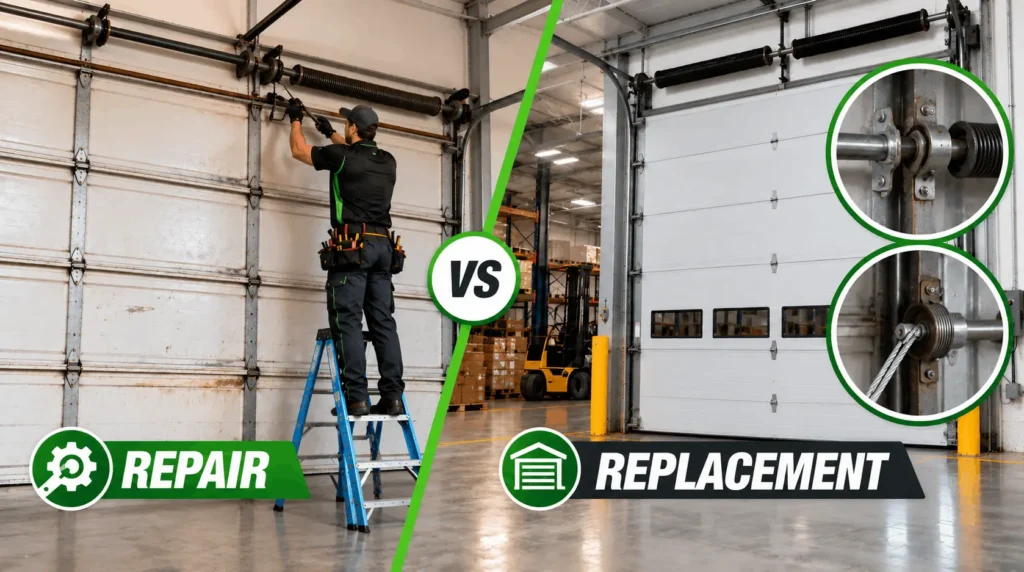
Repair or Replacement: Which Is Better for a Commercial Door?
Not every commercial garage door problem means the entire door needs to be replaced.
If the door structure is in good condition and the problem is limited to a worn spring, cable, roller, track component, opener, or another replaceable part, repair may make sense.
Replacement becomes more relevant when the door has extensive structural damage, repeated major failures, severe corrosion, outdated components, or a condition where continued repairs no longer make practical sense.
The age of the door and its operating demands should also be considered. A commercial property with high daily usage may benefit from a different solution than a lightly used facility.
A professional assessment can help property owners compare the condition of the existing system with the requirements of the property.
How Does Frequent Commercial Use Affect Garage Door Wear?
Commercial garage doors can experience significantly more operating cycles than residential doors.
Every opening and closing cycle places movement and load on components such as rollers, hinges, cables, springs, tracks, and the opener.
Over time, normal wear can result in increased noise, slower operation, vibration, or inconsistent movement.
This is why commercial property owners should not wait until a door completely stops working before considering maintenance. Changes in performance can provide an early indication that a component needs attention.
Why Commercial Garage Door Maintenance Matters
Regular commercial garage door maintenance can help property owners identify worn components before they cause a major interruption.
A maintenance inspection can evaluate the condition of moving components, hardware, safety systems, the opener, and the door itself. It can also help identify issues such as loose hardware, worn rollers, cable wear, track problems, or unusual balance.
Maintenance does not prevent every possible failure, but it can make developing problems easier to identify.
For properties that depend heavily on garage door access, scheduled maintenance can be particularly useful because unexpected downtime may affect employees, deliveries, vehicles, and daily operations.
For additional ongoing care, garage door maintenance services can help keep the system operating properly.
What About Commercial Garage Door Safety?
Safety should be considered before convenience when dealing with a malfunctioning commercial door.
A commercial garage door can be large and heavy, and its mechanical components may operate under significant tension. Employees and other people at the property should not attempt repairs involving springs, cables, brackets, or other high-tension components.
Safety sensors should also remain functional. They should never be bypassed simply because they are preventing a malfunctioning door from closing.
If the door is unstable or visibly damaged, keep people away from the operating area until a professional can inspect it.
When Is Commercial Garage Door Repair an Emergency?
Some commercial garage door problems require faster attention than others.
A door that is completely stuck open can create a security or weather-exposure issue. A door that is stuck closed can prevent vehicles, equipment, employees, or deliveries from accessing the property.
A broken spring, snapped cable, severely damaged track, or door that has come off its tracks may also require urgent professional attention.
The priority should be preventing additional damage and restoring safe access to the property.
If the door presents an immediate safety concern, do not continue operating it while waiting for service.
How Can Property Owners Prepare for a Commercial Garage Door Repair?
Before the technician arrives, make sure the area around the garage door is accessible.
Move vehicles, equipment, stored materials, or other obstacles away from the work area when possible. This gives the technician enough room to inspect and safely access the door.
It can also help to provide information about the door’s recent history. If the door recently received maintenance, experienced an impact, or developed a new noise, let the technician know.
If you have records of previous repairs or replacement parts, keep them available. This information may help the technician understand the system and avoid unnecessary guesswork.
Commercial Garage Door Repair for Different Property Types
Commercial garage doors are used in many different environments, including warehouses, workshops, storage facilities, service centers, commercial buildings, and other properties.
Each application can have different operating requirements.
A warehouse may prioritize frequent cycling and reliable access. A service facility may need enough clearance for vehicles and equipment. A storage property may be more concerned with security and dependable daily operation.
For that reason, commercial garage door service should be based on the actual application rather than a one-size-fits-all repair approach.
Choosing a Commercial Garage Door Repair Company
When searching for commercial garage door repair near me, consider more than availability.
Look for a company that can inspect the complete garage door system and clearly explain the problem. The technician should be able to discuss the condition of the relevant components and explain why a particular repair is recommended.
It is also useful to choose a provider familiar with both residential and commercial garage door systems, especially if your property uses larger or frequently operated doors.
The objective should be reliable and safe operation rather than simply getting the door moving again temporarily.
For commercial and residential garage door repair in The Woodlands, TX, 2Quick Garage Doors provides repair and maintenance services for property owners.
How to Reduce Future Commercial Garage Door Problems
The best way to reduce unexpected problems is to pay attention to the door between professional inspections.
If the door begins making a new sound, operating more slowly, shaking, or requiring more effort from the opener, treat the change as a warning rather than waiting for complete failure.
Keeping the tracks clear, avoiding accidental impacts, maintaining safety sensors, and scheduling regular professional inspections can also help maintain reliable operation.
Most importantly, do not ignore small mechanical changes simply because the door still works. Early attention can sometimes prevent a minor issue from becoming a major operational interruption.
Final Thoughts
Commercial garage doors are an important part of many properties, and a mechanical problem can quickly affect normal operations.
Before scheduling commercial garage door repair, property owners should understand the symptoms, consider how the door is used, and provide the technician with as much useful information as possible.
A complete inspection should look at the springs, cables, rollers, tracks, hinges, panels, opener, safety sensors, and overall door operation. This helps determine whether the problem can be repaired or whether replacement should be considered.
Regular maintenance is equally important. For a commercial property that depends on reliable garage door access, identifying wear before a major failure can help reduce unexpected downtime and unnecessary repair costs.
When a commercial door becomes unstable, stops working, comes off track, or develops a serious mechanical problem, prioritize safety and professional inspection rather than attempting a risky repair yourself.
Commercial Garage Door Repair FAQs
1. What are the most common commercial garage door problems?
Common problems include broken springs, damaged cables, worn rollers, bent or misaligned tracks, opener issues, damaged panels, faulty safety sensors, and general wear from frequent operation.
2. How often should a commercial garage door be inspected?
The appropriate inspection frequency depends on the door’s age, condition, and daily operating cycles. Frequently used commercial doors generally benefit from more regular professional inspections than lightly used doors.
3. Can I repair a commercial garage door myself?
Basic visual checks may be reasonable, but repairs involving springs, cables, tracks, brackets, or other high-tension components should be handled by a qualified commercial garage door technician.
4. Should I repair or replace my commercial garage door?
It depends on the door’s structural condition, age, operating demands, and repair history. If the main structure is sound, repairing individual components may be practical. Extensive damage or repeated major failures may make replacement worth considering.
5. When should I call for emergency commercial garage door repair?
Urgent service may be necessary when a door is stuck open or closed, has a broken spring or cable, comes off its tracks, is severely damaged, or creates an immediate safety or security concern.