
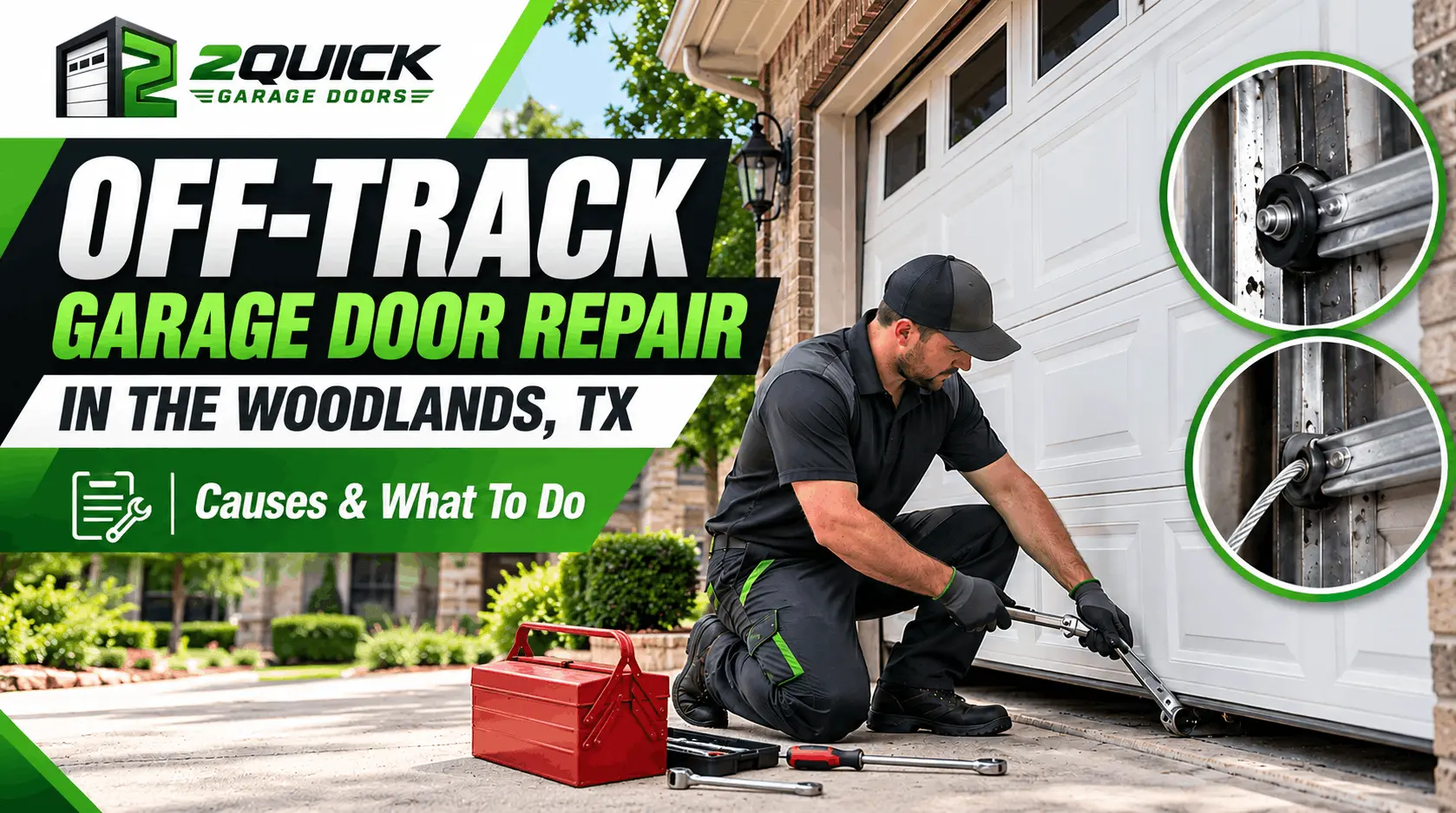
Off-Track Garage Door Repair in The Woodlands, TX: Causes & What to Do
A garage door is designed to move smoothly along its tracks every time it opens and closes. When one or more rollers come out of the track, the door can become crooked, stuck, noisy, or difficult to operate. What looks like a simple alignment issue can sometimes indicate a larger problem involving the rollers, cables, tracks, hinges, springs, or the overall balance of the door.
Knowing what causes a garage door to come off track can help you respond appropriately instead of making the situation worse. While some visible issues may appear easy to fix, attempting to force an off-track door back into position can create additional damage or a safety risk.
This guide explains the common causes of an off-track garage door, what you can safely check, what you should avoid doing, and when Off-Track Garage Door Repair from a professional is the better option.
What Does It Mean When a Garage Door Is Off Track?
A garage door moves vertically and horizontally along a system of tracks. Rollers attached to the door sections travel inside those tracks, allowing the door to move between the closed and open positions.
A garage door becomes off track when one or more rollers leave their intended path or when the track itself becomes damaged, bent, or significantly misaligned.
You may notice that one side of the door sits higher than the other, a section appears to lean outward, or the door becomes stuck during operation. In some cases, the door may still move, but it no longer travels smoothly.
An off-track garage door should not be treated like a normal opener problem. The opener may still run, but continuing to operate it can put additional strain on the door and other components.
What Causes a Garage Door to Come Off Track?
There is rarely just one reason a garage door comes off its tracks. Different components work together, so a problem with one part can affect the movement of the entire system.
Understanding the underlying cause is important because simply putting a roller back into the track may not solve the problem permanently.
1. Damaged or Bent Garage Door Tracks
The tracks guide the rollers throughout the door’s movement. If a track becomes bent or damaged, the rollers may no longer have a clear path.
Track damage can happen after an accidental impact, long-term wear, loose hardware, or excessive pressure on the door.
A visibly bent track should not be forced back into shape. Even a small change in track position can affect how the door moves, particularly when combined with worn rollers or damaged hinges.
If you notice a significant bend or separation in the track, professional garage door track repair may be necessary.
2. Worn or Broken Garage Door Rollers
Garage door rollers move through the tracks every time the door operates. Over time, rollers can wear, crack, become noisy, or stop moving smoothly.
A damaged roller can create additional friction and may eventually cause the roller to leave the track.
Worn rollers can also make the door sound louder than usual. If you notice excessive vibration, grinding, or rough movement before the door comes off track, the rollers may have been showing warning signs.
In some situations, garage door roller replacement can be part of the solution, but the entire door system should be checked to determine why the roller failed.
3. Garage Door Cable Problems
Garage door cables work with the spring system to help lift and balance the door.
When a cable becomes loose, frayed, disconnected, or broken, one side of the door can move differently from the other. This uneven movement can contribute to an off-track situation.
A garage door cable problem should never be treated as a simple track issue. If a cable has come loose, there may be an underlying problem with the springs, drums, balance, or another part of the lifting system.
If you can see a loose or broken cable, avoid operating the door until it has been inspected.
4. Impact or Accidental Damage
Garage doors can come off track after an impact.
For example, a vehicle, piece of equipment, or another object may strike the bottom section or side of the door. Even if the damage does not initially appear severe, the impact can shift the tracks, bend a section, damage rollers, or affect the hinges.
This type of problem is particularly important to inspect carefully because replacing one visible component may not correct hidden damage.
After an impact, look at the door from a safe distance and avoid operating it if it appears crooked or unstable.
5. Loose Track Hardware
Garage door tracks are secured with hardware that keeps them in their intended position.
Over time, vibration and repeated operation can contribute to hardware becoming loose. If the track shifts enough, the rollers may not travel correctly.
A loose fastener may look like an easy DIY repair, but you should be cautious about tightening hardware around a garage door system without understanding how the components are positioned.
If the track has moved significantly, the correct solution may involve more than tightening one fastener.
6. Damaged Hinges or Door Sections
Garage door hinges connect individual sections and allow the door to bend as it travels through the curved portions of the track.
If a hinge becomes damaged or a door section is bent, the rollers may no longer stay properly aligned with the tracks.
This can be especially noticeable when the door reaches the transition between the vertical and horizontal sections of the track.
A damaged hinge or panel can therefore contribute to an off-track garage door even when the track itself looks normal.
What Are the Signs of a Garage Door Off Track?
Sometimes the problem is immediately obvious. In other cases, the garage door may show warning signs before a roller completely leaves the track.
You may notice that one side of the door sits higher than the other, a section appears tilted, or the door rubs against the track while moving.
Other signs include unusual grinding or scraping sounds, rollers that appear outside their normal position, a door that gets stuck halfway, or a door that suddenly becomes difficult to open.
If the door looks crooked or moves differently from its normal path, stop operating it until the cause is understood.
Why You Should Not Force an Off-Track Garage Door
One of the biggest mistakes property owners make is trying to force the door open or closed after it comes off track.
An off-track door can be under uneven tension. The springs and cables may still be supporting the door’s weight, while the rollers and tracks are no longer guiding it correctly.
Forcing the door can damage additional rollers, tracks, hinges, cables, or door sections. It can also put unnecessary strain on the opener.
If the door is severely crooked, partially detached from the tracks, or appears unstable, avoid using the opener altogether.
Can You Fix an Off-Track Garage Door Yourself?
The answer depends on what caused the problem. A simple visual inspection is reasonable. You can look for an obvious obstruction, inspect the visible track area, and identify whether the door appears crooked or whether a roller is visibly out of position.
However, actually putting a roller back into a track can involve moving a heavy door and working around springs, cables, and other components under tension.
That makes DIY garage door repair risky when the cause is not clearly understood.
If the door is severely off track, a cable is loose or broken, a spring appears damaged, or the track is bent, professional inspection is the safer choice.
What Should You Do When Your Garage Door Comes Off Track?
The first step is to stop operating the door. If the opener is still connected, repeatedly pressing the remote or wall button can cause the opener to continue pulling against a door that is not moving correctly.
Instead, keep people away from the affected area and visually assess the situation from a safe distance.
If the door is stuck, crooked, or partially off its tracks, contact a qualified garage door technician. Explain what happened and whether the door was operating normally before the problem occurred.
A technician can inspect the tracks, rollers, cables, hinges, springs, and door alignment to determine the actual cause.
For professional garage door repair in The Woodlands, TX, the complete system can be evaluated rather than simply repositioning the visible component.
Off-Track Garage Door Repair: What Does a Technician Check?
A proper Off-Track Garage Door Repair inspection should look beyond the roller that has left the track.
The technician will typically evaluate the condition and alignment of the tracks, the rollers attached to the door, the cables and spring system, the hinges and brackets, and the overall balance of the door.
The door sections should also be checked for impact damage or distortion.
This broader inspection matters because an off-track door is often a symptom rather than the original problem. For example, replacing a damaged roller without checking a bent track may allow the same issue to happen again.
How Garage Door Track Alignment Affects Door Operation
Correct garage door track alignment allows the rollers to travel smoothly as the door moves.
The tracks need to maintain their intended position relative to the door and each other. If one track shifts or becomes bent, the door can develop uneven movement.
Misalignment may cause the door to rub against the track, make unusual noises, move slowly, or eventually come off track.
Because track positioning affects the entire door system, significant alignment problems should be evaluated professionally instead of being corrected through trial and error.
What Happens If You Keep Using an Off-Track Garage Door?
Continuing to operate a garage door off track can turn a manageable repair into a much larger problem.
The garage door opener may continue trying to move the door even though the rollers are not following the correct path. This can increase strain on the opener and place additional stress on the cables, hinges, rollers, and tracks.
A damaged track can also become more distorted as the door moves against it.
If the door is already visibly off track, stopping operation is generally the safer choice until the system has been inspected.
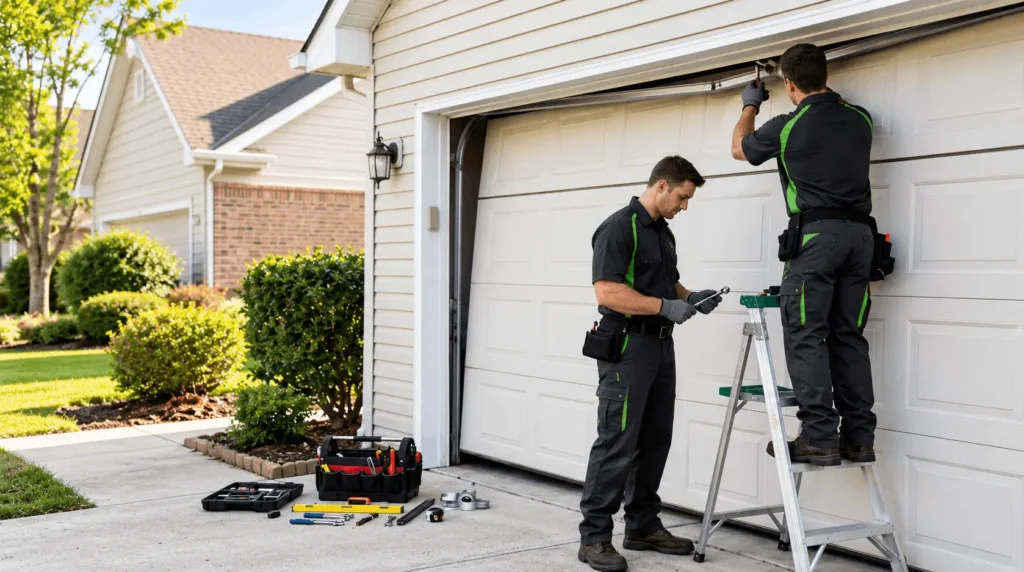
Off-Track Garage Door Repair for Residential and Commercial Properties
Off-track problems can occur on both residential and commercial garage doors. Residential doors may come off track because of worn rollers, accidental impact, cable problems, loose hardware, or track damage. Because residential doors are often used multiple times throughout the day, gradual wear can eventually affect their operation.
Commercial garage doors can experience similar problems, but higher usage cycles and larger door systems may increase the importance of regular inspection and maintenance.
For either type of property, an off-track problem should be evaluated based on the complete door system rather than only the component that appears damaged.
How to Prevent Garage Door Track Problems
Preventive maintenance cannot guarantee that a garage door will never come off track, but it can help identify developing problems.
Pay attention to changes in the door’s movement and listen for new sounds. If rollers become excessively noisy, the door begins shaking, or one side appears to move differently, have the system inspected before the problem develops further.
Regular maintenance can also help identify worn rollers, damaged hinges, loose hardware, cable issues, and other conditions that may eventually affect track alignment.
Keeping the garage door’s operating area clear is also important. Objects that interfere with the door can cause impact damage or place unexpected pressure on the system.
For ongoing care, garage door maintenance services can help identify wear before it develops into a more serious problem.
When Is an Off-Track Garage Door an Emergency?
Not every track issue requires the same level of urgency, but some situations should be addressed immediately.
If the door is hanging at an angle, partially detached, supported unevenly, or has a broken cable or spring, avoid operating it.
A door that is stuck open can also create a security concern, particularly for a commercial property or a residential garage that provides access to the property.
If the door appears unstable or there is a risk of it falling, keep people away from the area and arrange professional service as soon as possible.
Off-Track Garage Door Repair in The Woodlands, TX
For property owners in The Woodlands, TX, an off-track garage door should not be ignored simply because the door can still move.
A door that continues operating while rollers, tracks, cables, or hinges are damaged can develop additional problems. Addressing the underlying cause early can help prevent unnecessary damage to the door and opener.
Whether the issue started after an impact, developed gradually because of worn rollers, or appeared suddenly because of a cable problem, a complete inspection can determine which components need attention.
The right repair should restore proper movement while addressing the reason the door came off track in the first place.
Final Thoughts
An off-track garage door is more than a minor alignment inconvenience. The problem can involve the tracks, rollers, cables, hinges, springs, door sections, or several components working together.
The safest response is to stop operating the door when it is visibly crooked, stuck, or partially off its tracks. Avoid forcing the door back into position or adjusting components under tension without the proper knowledge and equipment.
A professional Off-Track Garage Door Repair inspection can identify the underlying cause and determine whether the tracks, rollers, cables, hinges, or other components need repair or replacement.
Regular maintenance and paying attention to early warning signs can also help reduce the likelihood of the same problem happening again.
Frequently Asked Questions
1. What causes a garage door to come off track?
Common causes include damaged or bent tracks, worn rollers, loose hardware, cable problems, damaged hinges, impact, and problems with the door’s balance.
2. Can I fix an off-track garage door myself?
A visual inspection is generally safer than attempting a mechanical repair. If the door is significantly off track or the problem involves cables, springs, tracks, or a heavy door, professional repair is recommended.
3. Should I use my garage door opener if the door is off track?
No. Continuing to operate an off-track door can place additional strain on the opener and other components and may increase the damage.
4. How do I know if my garage door track is damaged?
Visible bends, significant gaps, unusual roller movement, scraping sounds, or a door that moves unevenly can indicate a track problem. A technician can determine whether the track is bent or misaligned.
5. How can I prevent my garage door from coming off track?
Regular maintenance, timely replacement of worn rollers, addressing cable and hinge problems, keeping the tracks clear, and responding to unusual movement or noise can help reduce the risk of an off-track garage door.